Learn how trackless dark rides keep guests safe with advanced technology, strict standards, and easy evacuation procedures. Trackless Dark Rides Safety remains a top priority for amusement parks. These rides use advanced navigation systems, sensors, and strict safety protocols to protect every rider. Engineers design these attractions to follow international standards and perform regular checks. Riders experience smooth journeys with reliable safety features in place.
Key Takeaways
- Trackless dark rides use advanced technology like automated navigation systems to enhance safety and prevent accidents.
- Emergency stop mechanisms and clear evacuation procedures ensure quick responses during unexpected situations, keeping guests safe.
- Regular inspections and maintenance of ride systems are crucial for reliability and compliance with safety standards.
- Staff training is essential for effective operation and emergency response, ensuring a safe experience for all riders.
- Accessibility features in trackless dark rides support guests with disabilities, making rides enjoyable for everyone.
Trackless Dark Rides Safety Features
Automated Navigation Systems
Automated guided vehicles form the backbone of trackless dark rides. These vehicles use advanced sensors and navigation software to move safely through the ride environment. Engineers design these systems to detect obstacles and adjust routes instantly. This technology increases flexibility and reduces the risk of accidents. Operators rely on automated ride safety systems to monitor vehicle speed and position at all times.
The following table shows the levels of passenger safety technologies used in automated navigation:
| Level | Description | Example Technologies |
|---|---|---|
| 0 | Momentary Driver Assistance | Automatic Emergency Braking, Forward Collision Warning, Lane Departure Warning |
| 1 | Driver Assistance | Adaptive Cruise Control, Lane Keeping Assistance |
| 2 | Additional Assistance | Highway Pilot |
| 3 | Conditional Automation | - |
| 4 | High Automation | - |
| 5 | Full Automation | - |
Trackless ride reliability depends on these systems. Operators perform regular checks to ensure all sensors and controls function correctly. Dark ride safety standards require that vehicles stop automatically if they detect an object or a person in their path. This prevents collisions and keeps passengers safe.
Emergency Stop and Evacuation
Trackless dark rides include emergency stop mechanisms that halt vehicles immediately if a problem occurs. Operators can activate these stops manually or rely on automated systems to trigger them when sensors detect hazards. This feature protects passengers from unexpected situations.
Operators follow strict evacuation procedures during emergencies. Manufacturers provide detailed documentation for these procedures, which ensures staff know how to guide passengers safely out of the ride. Staff receive training to handle emergencies quickly and calmly. The absence of tracks allows easier access for evacuation teams, reducing downtime and improving overall safety.
Trackless Dark Rides Safety protocols require operators to review evacuation plans regularly. Staff must practice these procedures to maintain readiness. Compliance with dark ride safety standards ensures that all emergency actions meet industry requirements.
Rider Restraints and Boarding
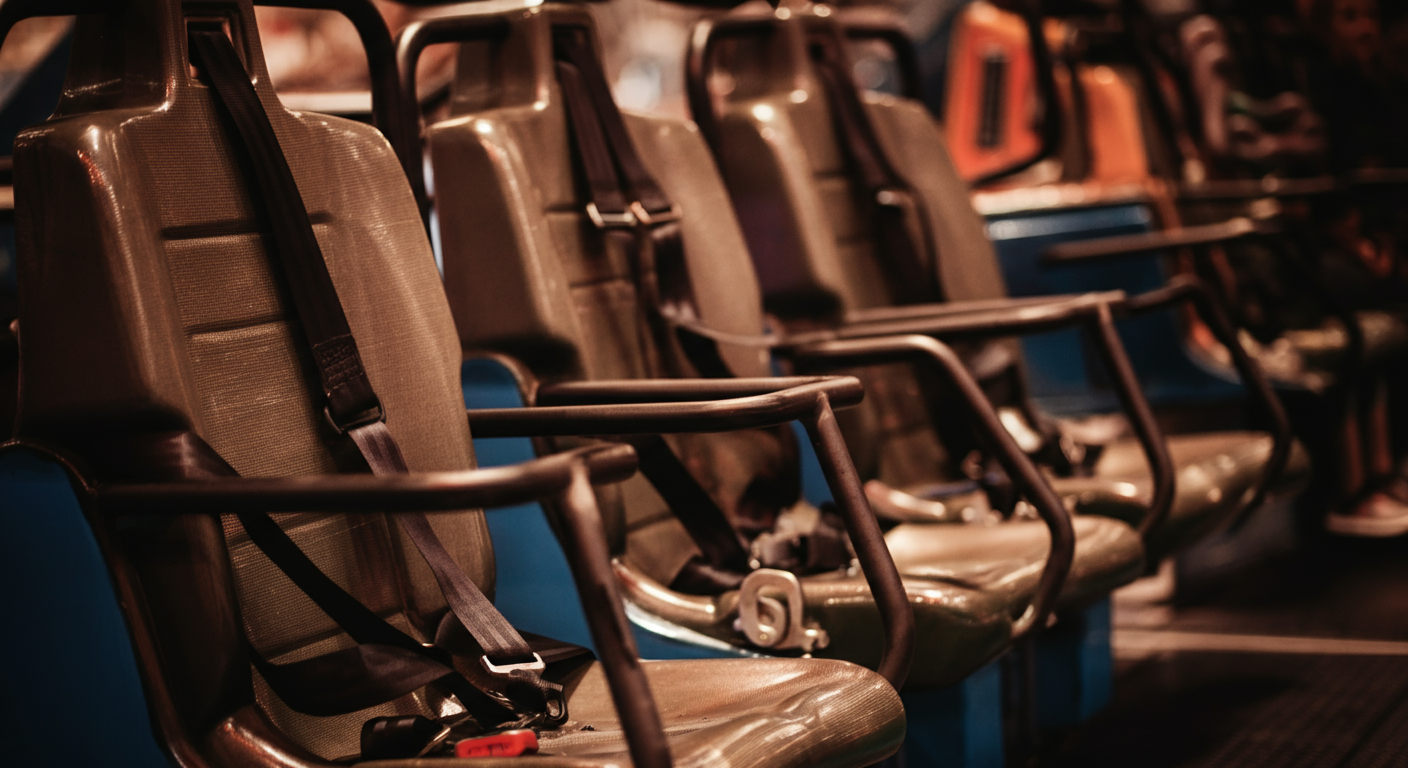
Passenger safety mechanisms include secure restraints and clear boarding instructions. Engineers design restraints to keep riders in place during the journey. Staff check restraints before the ride begins to confirm proper use. Boarding platforms feature markings and signs to guide passengers.
Operators provide instructions to help riders board safely and use restraints correctly. Staff monitor boarding areas to prevent accidents and assist guests with special needs. Trackless Dark Rides Safety guidelines require that all restraint systems meet international standards, such as ASTM F2291. This standard covers the design, operation, and maintenance of amusement rides, emphasizing the importance of compliance to prevent accidents.
Note: Operators must inspect restraint systems daily and follow maintenance schedules to ensure reliability.
Trackless ride reliability improves when staff follow these protocols. Automated ride safety systems and dark ride safety standards work together to protect every passenger.
Managing Risks in Trackless Dark Rides
Collision and Power Failure Prevention
Trackless dark rides present unique hazards that operators must address to ensure guest safety. Common risks include sudden flashes of light, which can disorient riders or trigger medical conditions such as epilepsy. Bright flashes may impair vision and increase the chance of accidents in moving vehicles. Operators must manage these hazards to support trackless ride accident prevention.
- Sudden light exposure can cause confusion.
- Medical conditions like epilepsy may be triggered.
- Impaired vision increases accident risk.
Technology plays a critical role in preventing collisions and power failures. Engineers use advanced systems to monitor and control ride vehicles. The following table shows how different technologies contribute to accident prevention and reliability:
| Technology Type | Description |
|---|---|
| Collision Avoidance | Sensors such as sonic, optical, and bumper detect obstacles and prevent collisions. |
| Zone Control | Manages vehicle spacing and works with collision avoidance to prevent accidents. |
| Battery Management | Maintains stable power supply and prevents failures during operation. |
Operators rely on these systems to maintain theme park ride compliance and reduce downtime. Zone control and collision avoidance work together to keep vehicles safely separated. Battery management ensures that rides continue operating even during unexpected power fluctuations. These technologies support tracklets dark rides safety by minimizing risks and improving reliability.
Staff and Technology Roles
Staff members and technology both play essential roles in maintaining safety. Operators use programmable logic controllers (PLCs) to monitor ride functions and protect guests from injury. Safety Integrity Level (SIL) 2 provides multiple layers of protection, reducing the likelihood of failure to one per 1 to 10 million hours of operation. Free-ranging automated guided vehicles (AGVs) use inertial navigation, laser scanners, optical encoders, and sensors to monitor obstacles and vehicle positions.
| Safety Technology | Description |
|---|---|
| Programmable Logic Controllers (PLCs) | Staff use PLCs for safety functions and monitoring to protect guests and operators. |
| Safety Integrity Level (SIL) 2 | Multiple protection layers reduce failure risk to extremely low levels. |
| Free-ranging AGVs | AGVs use navigation and sensors for obstacle monitoring and safe movement. |
| Supervisory Control System | Interfaces with subsystems to determine vehicle position and control propulsion. |
Operators monitor ride systems in real time and respond quickly to any issues. Staff receive training to follow emergency protocols and guide guests during unexpected events. Technology supports staff by providing accurate information and automated responses. Together, staff and technology ensure theme park ride compliance and uphold Trackless Dark Rides Safety standards.
Operators must review safety procedures regularly and update protocols as needed. Staff training and technology upgrades help maintain high safety standards and prevent accidents.
Rider Safety Guidelines
Pre-Ride Instructions
Riders must follow all posted safety instructions before boarding a trackless dark ride. Staff members provide guidance and answer questions about the ride. Signs display important information about height requirements, health warnings, and restraint use. Riders should listen carefully to staff and read all instructions. They must secure loose items and sit upright in their seats. Staff check restraints and confirm that each rider is ready. Riders who follow these steps help maintain a safe environment for everyone.
Tip: Riders should ask staff for help if they have concerns or need assistance with boarding.
Emergency Procedures
Trackless dark rides include clear emergency procedures to protect guests. Staff receive training to respond quickly during unexpected events. Riders should remain calm and wait for instructions from staff. If a ride stops suddenly, riders must stay seated and avoid moving until staff arrive. Staff will guide riders through evacuation steps if necessary. Emergency lighting and communication systems help staff manage the situation. Riders who cooperate with staff ensure a smooth and safe evacuation.
Steps for riders during an emergency:
- Stay seated and remain calm.
- Listen for instructions from staff.
- Follow staff guidance during evacuation.
- Use emergency exits only when directed.
Accessibility Considerations
Trackless dark rides offer features that support guests with disabilities. Engineers design ride vehicles to accommodate wheelchairs and other mobility devices. Alternate load and unload areas allow guests to board at their own pace. Turntable systems enable guests to wheel onto the ride and face forward without transferring. Staff assist guests with special needs and provide information about accessibility options.
| Accessibility Feature | Description |
|---|---|
| Alternate Load/Unload Area | Allows guests to take their time getting in and out without disrupting the ride narrative. |
| Accessible Ride Vehicle | Designed to accommodate guests in wheelchairs, resembling traditional vehicles. |
| Turntable System | Enables guests to wheel onto the boat and face forward seamlessly, eliminating the need for transfers. |
Note: Riders should inform staff about any special needs before boarding. Staff will help ensure a safe and comfortable experience.
Operator Safety Protocols
Daily Inspections and Maintenance
Operators perform daily inspections to maintain the safety and reliability of trackless dark rides. They check sensors, brakes, and battery systems before opening the ride to guests. Routine maintenance follows ASTM standards, such as F2291, which set guidelines for design and operation. Technicians examine collision avoidance systems, emergency braking, and fail-safe redundancy features. These checks help prevent accidents and ensure smooth operation.
| Safety Feature | Description |
|---|---|
| Collision Avoidance | Advanced LIDAR and proximity sensors provide real-time obstacle detection. |
| Automatic Emergency Braking | Vehicles halt instantly during unexpected obstructions or system faults. |
| Fail-safe Redundancy | Dual control circuits and battery backups maintain passenger safety in all scenarios. |
Operators document each inspection and address any issues immediately. Regular maintenance keeps the ride reliable and reduces downtime.
Staff Training
Staff members receive ongoing training to operate trackless dark rides safely. They learn how to support and maintain equipment, monitor ride systems, and respond to emergencies. Training covers the safe operation of robotic rides and includes practice drills for evacuation procedures.
- Ongoing support and maintenance of equipment.
- Regular training of employees to ensure safe operation of robotic rides.
Staff understand how to use safety technology and follow protocols. They stay prepared to assist guests and handle unexpected situations.
Compliance and Continuous Improvement
Operators comply with international safety standards and update protocols regularly. Regulatory bodies, such as ASTM and EN, oversee compliance for trackless dark ride safety.
| Safety Standard | Description |
|---|---|
| ASTM F2291 | Standard for design, manufacture, and operation of amusement rides and devices. |
| EN 13814 | European standard for the safety of amusement rides and amusement devices. |
Continuous improvement involves monitoring ride performance and integrating new technology. Operators use trackless systems to avoid rails and cables, allowing flexible installation. Real-time monitoring tracks vehicle positions and enables quick adjustments for safety. Advanced battery technology supports efficient operation and recharging.
| Feature | Benefit |
|---|---|
| Trackless technology | Eliminates the need for rails or cables, allowing for flexible installation around obstacles. |
| Continuous monitoring | Ensures real-time tracking of vehicle positions, enabling quick adjustments for safety. |
| Integrated battery technology | Utilizes advanced lithium iron technology for efficient recharging and operation. |
Operators review safety protocols often and make improvements to meet new standards. These actions support Trackless Dark Rides Safety and protect every guest.
Trackless dark rides offer strong safety assurances and reliable operation. Staff training, maintenance programs, and routine inspections support guest safety. The table below compares trackless and traditional rides:
| Feature | Trackless Dark Rides | Traditional Rides |
|---|---|---|
| Track System | No tracks or rails | Fixed tracks |
| Terrain Flexibility | Operates on wet and dry terrains | Limited to track layout |
| Environmental Adaptability | Functions in rain and fog | May be affected by weather |
Safety protocols include proper restraints, height restrictions, and regular inspections. Guests should follow posted guidelines and listen to staff for a safe adventure.
FAQ
Are trackless dark rides safer than traditional rides?
Trackless dark rides use advanced sensors and automated systems to prevent collisions. These features often make them safer than traditional rides with fixed tracks. Operators follow strict safety standards and perform daily inspections to maintain reliability.
What happens if a trackless ride loses power?
Backup battery systems activate if the main power fails. Vehicles stop safely, and staff follow emergency procedures to assist guests. Operators train regularly to handle power loss situations and ensure passenger safety.
How do operators ensure the rides meet safety standards?
Operators follow international standards like ASTM F2291 and EN 13814. They conduct daily inspections, maintain equipment, and document all safety checks. Regulatory bodies review compliance to guarantee guest protection.
Can guests with disabilities ride trackless dark rides?
Many trackless dark rides offer accessible vehicles and alternate boarding areas. Staff assist guests with mobility devices and provide information about available features. Operators design these rides to accommodate a wide range of needs.
What should riders do during an emergency stop?
Riders should remain seated and calm. Staff will provide instructions and guide everyone through evacuation if needed. Emergency lighting and communication systems help ensure a safe and orderly process.


