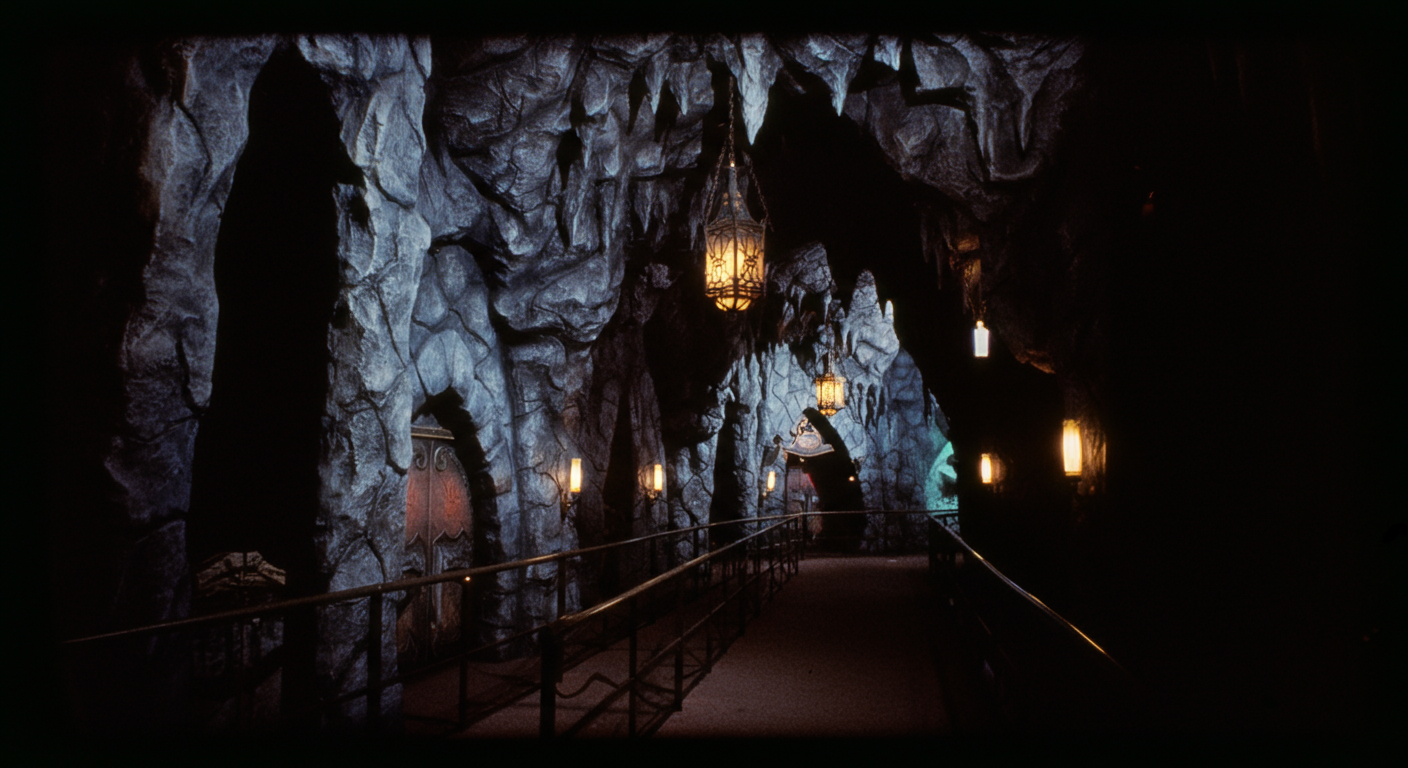
Trackless vs. Tracked dark ride systems each offer unique strengths for theme parks. Operators seeking high capacity and proven reliability often prefer tracked rides, as these systems support shorter wait times and easier staff training. Parks focused on immersive storytelling or IP-driven experiences may choose trackless rides, which allow for dynamic layouts and greater flexibility. Accessibility for disabled guests and maintenance needs also play a major role in the selection process. Early consultation with experts helps align system choice with long-term operational goals.
Key Takeaways
- Trackless dark rides offer flexible layouts, allowing for creative designs that adapt to unique spaces.
- Tracked dark rides provide high capacity and predictable operations, making them ideal for busy parks.
- Choose trackless systems for immersive storytelling and dynamic guest experiences that encourage re-rides.
- Consider budget and maintenance needs; tracked rides typically have lower initial costs and easier upkeep.
- Evaluate your park's goals: trackless rides support adaptability, while tracked rides ensure stability and reliability.
- Engage with experts early in the planning process to align your ride choice with long-term operational goals.
- Assess the importance of guest experience; trackless rides can create unique journeys, while tracked rides offer consistency.
- Plan for future updates; trackless systems allow for easier modifications and integration of new technologies.
Key Decision Factors
Space & Layout
Space and layout play a major role in selecting the right dark ride system. Tracked rides require a fixed path, which means designers must plan the attraction around a set route. This approach works well for parks with limited space or existing buildings. The ride path cannot change easily, so future modifications often involve significant construction. Trackless rides offer more flexibility. Vehicles move independently, allowing designers to create complex layouts with intersections, branching paths, and open areas. This flexibility helps parks use irregular spaces or adapt to unique building shapes. Operators can also adjust the ride experience over time, making trackless systems a strong choice for parks seeking long-term adaptability.
Budget & Cost Structure
Budget is a key factor in any attraction development. Tracked dark rides usually have predictable costs. The technology is mature, and installation follows established processes. Maintenance teams can rely on standard parts and procedures, which helps control ongoing expenses. Trackless systems often require a higher initial investment. The technology involves advanced software, sensors, and network infrastructure. Integration and testing may take longer, which can increase upfront costs. Maintenance for trackless rides may also need specialized staff and equipment. Parks must weigh the benefits of flexibility and guest experience against the higher cost and complexity. Careful budgeting ensures the chosen system aligns with financial goals.
Theming & Storytelling Needs
Theming and storytelling drive guest engagement and satisfaction. Trackless vs. Tracked systems offer different creative opportunities. Trackless rides elevate creative potential and open new possibilities for storytelling. Vehicles are not confined to rails, so designers can build branching paths, intersections, and non-linear layouts. This freedom allows for dynamic storytelling, where each ride can offer a slightly different experience. Designers control pacing by adjusting vehicle speed, which helps create dramatic moments or manage visitor flow. Tracked rides support traditional storytelling with a fixed route and predictable pacing. This approach works well for attractions with linear narratives or classic ride experiences.
Tip: Parks focused on immersive, IP-driven experiences often benefit from the flexibility of trackless systems. Parks seeking reliable, repeatable storytelling may prefer tracked rides.
- Trackless dark rides:
- Enable complex layouts and branching paths
- Support dynamic, non-linear storytelling
- Allow independent vehicle movement and pacing
- Tracked dark rides:
- Provide fixed layouts and predictable pacing
- Support linear storytelling and classic ride formats
Choosing the right system depends on the park’s creative vision and the type of guest experience desired.
Capacity & Throughput (THRC)
Capacity and throughput, often measured as Theoretical Hourly Ride Capacity (THRC), are critical for theme parks that expect high attendance. Tracked dark rides usually offer higher THRC because vehicles move in a continuous loop along a fixed path. This system allows for precise timing and short intervals between vehicles. Parks that need to move large numbers of guests efficiently often choose tracked rides for this reason.
Trackless rides can also achieve strong capacity, but their flexibility sometimes leads to lower THRC. Vehicles may pause for show scenes or take different routes, which can reduce the number of guests moved per hour. Careful planning and advanced ride control systems can help trackless rides reach competitive capacity, but they rarely match the highest numbers seen in tracked systems. When comparing Trackless vs. Tracked, parks must consider whether guest flow or creative freedom is the top priority.
Guest Experience & Re-rideability
Guest experience shapes the reputation of any attraction. Trackless rides create unique journeys for each group of riders. Vehicles can change speed, direction, and even route, making every ride feel different. This variety increases re-rideability, as guests may want to return for a new adventure. Trackless systems also support immersive storytelling, with vehicles moving closer to show elements or interacting with the environment in new ways.
Tracked rides provide a consistent experience. Every guest follows the same path and sees the same scenes in the same order. This predictability can be a strength for classic attractions or for parks that want to deliver a reliable story every time. However, re-rideability may be lower, since repeat guests know what to expect. Parks must decide if they value consistency or the excitement of surprise.
Note: Parks focused on family audiences or repeat local visitors may benefit from the higher re-rideability of trackless systems.
Maintenance & Operations
Maintenance and operations affect long-term costs and ride availability. Trackless dark rides are often easier to maintain because each vehicle contains its own drive and control system. The lack of rails and a centralized control system means fewer mechanical parts that can wear out. Vehicles run on rechargeable batteries, which typically last a full day and require only overnight charging. Maintenance tasks are usually quicker and more contained, leading to less downtime and more consistent operation.
Tracked rides rely on a central system and fixed rails. While these systems are mature and well-understood, they involve more moving parts that need regular inspection and replacement. Maintenance teams can use standard procedures and parts, but repairs may require more time and effort. Parks should consider their staff’s expertise and the availability of spare parts when choosing between these systems.
Scalability & Future-Proofing
Scalability and future-proofing are essential factors for any theme park planning a new dark ride. As guest expectations change and technology advances, parks must consider how easily an attraction can adapt over time. Both trackless and tracked systems offer unique paths for growth, but their approaches differ.
Trackless rides provide strong scalability. Operators can add new vehicles to increase capacity, as long as the ride control system supports it. Designers can also update show scenes or change the ride path without major construction. This flexibility allows parks to refresh the experience or expand the attraction as new intellectual properties (IPs) become available. Trackless systems also support software updates, which can introduce new features or improve performance. These updates help keep the attraction relevant and engaging for repeat visitors.
Tracked rides offer a more traditional approach to scalability. Increasing capacity often means adding more vehicles, but the fixed path limits how many can run at once. Modifying the layout or updating scenes usually requires significant construction. This process can disrupt park operations and increase costs. However, tracked systems have a long history of reliable operation. Many parks have run these rides for decades with regular maintenance and occasional upgrades. This proven track record gives operators confidence in long-term performance.
Tip: When planning for the future, consider how easily your team can update or expand the attraction. Trackless rides offer more options for change, while tracked rides provide stability and predictability.
Here are some key points to consider for scalability and future-proofing:
- Trackless rides:
- Allow for flexible expansion and layout changes
- Support easy integration of new technology or IPs
- Enable software-driven updates and enhancements
- Tracked rides:
- Offer proven reliability over long periods
- Require more effort and cost for major changes
- Provide consistent operation with established maintenance routines
Choosing between trackless and tracked systems depends on your park’s long-term vision. If you value adaptability and want to keep the attraction fresh, a trackless system may be the better fit. If you prefer a stable, time-tested solution, a tracked ride could serve your needs well. The Trackless vs. Tracked decision should align with your goals for growth, guest engagement, and operational efficiency.
Trackless Dark Rides
What are Trackless Dark Rides
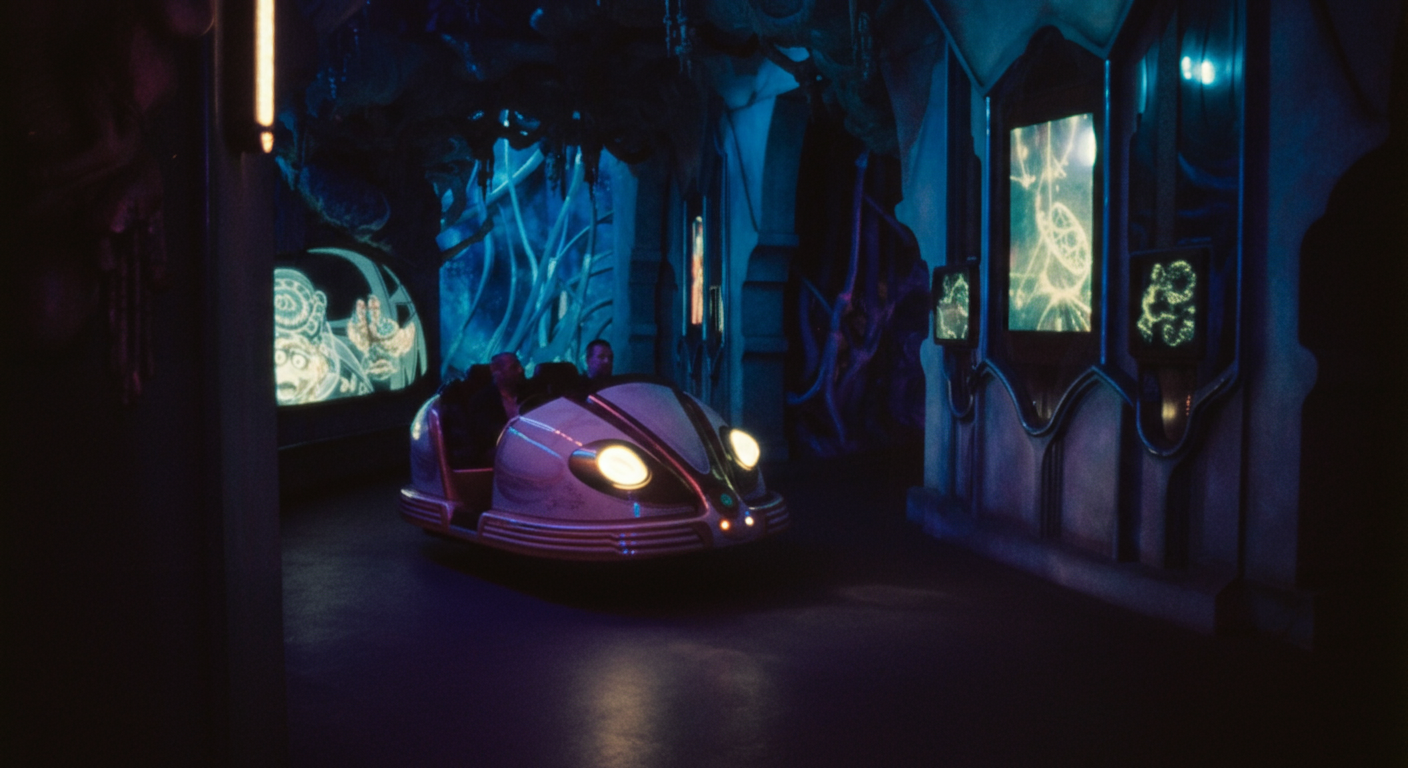
Trackless dark rides use advanced technology to move vehicles without visible guide rails. Each vehicle operates independently, guided by location position systems. These systems calculate paths in real time, allowing vehicles to travel in multiple directions and even interact with each other. This approach creates a non-linear narrative, where the ride experience can change with each journey.
| Feature | Description |
|---|---|
| Absence of guide rails | Vehicles move freely without fixed tracks. |
| Location Position Systems | Enable dynamic movement and real-time path calculation. |
| Non-linear narrative | Supports unpredictable routes and unique storytelling. |
A well-known example is Pooh’s Hunny Hunt, which uses these technologies to let vehicles move independently and interact with show elements in real time.
When to Choose Trackless
Theme parks often select trackless systems when they want to create a more immersive and interactive experience. Vehicles can move in any direction, which enhances storytelling and guest engagement. Trackless rides also offer safety benefits. Evacuation is easier because vehicles are not confined to rails. Maintenance can be simpler, as each vehicle operates on its own system. Parks that value flexibility, guest interaction, and safety often find trackless rides to be a strong choice.
Trackless Advantages
Flexible layouts and adaptable footprints
Trackless rides allow designers to use space creatively. Vehicles can navigate around obstacles, through open areas, or along branching paths. This flexibility helps parks fit attractions into irregular spaces or existing buildings. Operators can also update layouts or add new scenes without major construction. This adaptability supports long-term planning and future expansion.
Highly immersive and dynamic guest experiences
Trackless systems enable vehicles to move closer to show elements, change speed, or even interact with other vehicles. This creates a sense of unpredictability and excitement. Guests feel more involved in the story, as the ride can respond to their presence or actions. The result is a memorable and engaging experience that stands out from traditional rides.
Significantly higher re-rideability
Re-rideability is a key advantage of trackless systems. Because vehicles can take different routes or interact with scenes in new ways, each ride can feel unique. Guests may return to experience new storylines or surprises. This feature increases guest satisfaction and encourages repeat visits, which benefits park attendance and revenue.
Strong support for IP-driven storytelling
Trackless rides support both original concepts and popular intellectual properties (IPs). Designers can create branching narratives, interactive moments, and immersive environments that match the needs of any story. This theming flexibility appeals to a broad audience, including families and fans of specific brands. Parks can update or refresh the attraction as new IPs become available, keeping the experience relevant over time.
Note: When comparing Trackless vs. Tracked systems, decision-makers should consider how trackless technology supports creative vision, operational flexibility, and long-term guest engagement.
Trackless Limitations
Higher system and integration complexity
Trackless dark rides use advanced navigation and control systems. Each vehicle must communicate with a central computer and with other vehicles. This setup increases the complexity of both hardware and software. Integration with show elements, lighting, and audio requires careful planning. Parks must coordinate between multiple vendors and technical teams. This complexity can lead to longer development timelines and higher project management demands.
Greater technical requirements for operations and maintenance
Operating a trackless ride requires staff with specialized skills. Maintenance teams must understand battery systems, wireless communication, and advanced sensors. Training is more involved compared to traditional tracked rides. Spare parts may not be as widely available, especially for custom components. Parks may need to invest in ongoing technical education for their teams. This can increase operational costs over time.
Longer testing and commissioning periods
Trackless rides need extensive testing before opening to the public. Each vehicle must perform safely and reliably in a shared space. Software updates and system integration checks are common during commissioning. These steps ensure guest safety and a smooth experience, but they also extend the project timeline. Parks should plan for longer soft openings and more time for troubleshooting.
Higher reliance on software and network stability
Trackless systems depend on stable software and robust wireless networks. Any interruption can affect ride performance or guest safety. Parks must monitor network health and update software regularly. Backup systems and cybersecurity measures are important. This reliance on technology means parks must be ready to address issues quickly to avoid downtime.
Best Park Fit
Trackless dark rides work best in parks that want to deliver premium, differentiated experiences. The following types of parks and projects benefit most from this technology:
- Experience-driven or premium attractions: Parks aiming for next-generation immersive attractions often choose trackless systems. These rides support advanced features like AR glasses, haptic feedback, and environmental effects, creating a level of interaction that traditional rides cannot match.
- IP-focused themed lands: Trackless rides integrate well with intellectual properties and themed environments. They allow for dynamic storytelling and real-time interaction, which enhances the value of branded experiences.
- Boutique parks or next-generation developments: Smaller parks or new projects can use trackless rides to stand out in a competitive market. These systems offer flexibility in layout and theming, making them ideal for unique or irregular spaces.
- Projects seeking differentiation and long-term flexibility: Parks looking to generate revenue through premium ticket pricing and repeat visitation find trackless rides appealing. Industry analysis shows that parks with top-tier trackless attractions can see repeat visitor rates up to 42%, which is significantly higher than traditional parks.
When comparing Trackless vs. Tracked systems, decision-makers should consider their park’s goals for guest experience, operational complexity, and long-term adaptability. Trackless rides offer strong support for immersive storytelling and future-proofing, but require greater investment in technology and staff training.
Tracked Dark Rides
What are Tracked Dark Rides
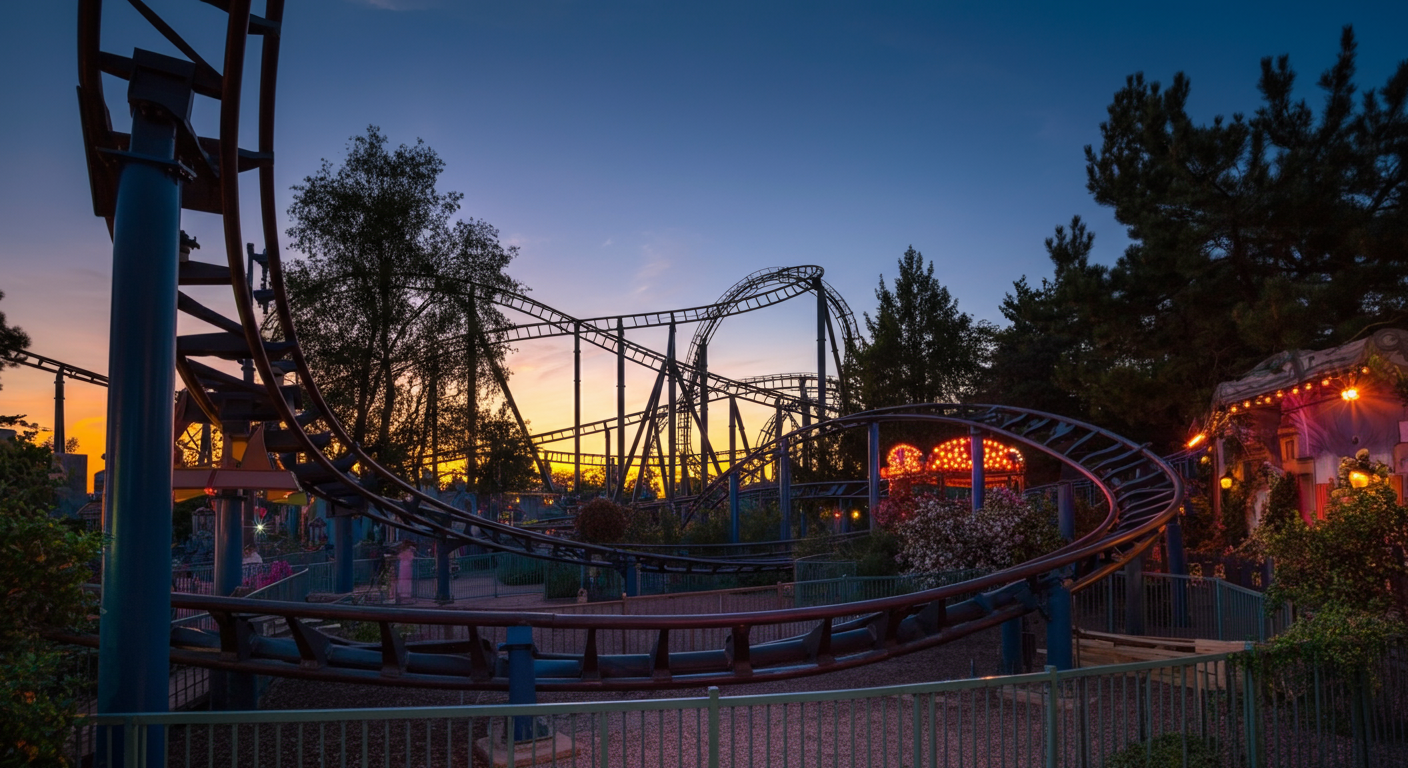
Tracked dark rides use a fixed rail system to guide vehicles through themed environments. Each vehicle follows a predetermined path, moving at a steady pace. The design often includes enclosed shells that seat two or three riders. Many vehicles can rotate on multiple axes, sometimes up to 360 degrees, which allows for dramatic scene reveals and controlled guest orientation. Automatic lap bars provide safety, while stabilizing wheels help during loading and unloading. The track system uses continuous rails and friction drive mechanisms for propulsion. Modular track sections allow for maintenance without stopping the entire ride. Most tracked rides operate at a constant speed, usually around 1.4 miles per hour, which matches the pacing of show scenes. Dedicated walkways ensure safe and efficient guest access during boarding and exiting.
- Vehicle shells seat 2–3 riders and may rotate for immersive effects
- Automatic lap bars and stabilizing wheels enhance safety and comfort
- Continuous rail infrastructure and friction drive propulsion
- Modular track sections support ongoing maintenance
- Constant speed aligns with show pacing
- Dedicated loading and unloading walkways
When to Choose Tracked
Theme parks often select tracked dark rides when they need proven reliability and high throughput. These systems work well in parks with high attendance, where moving large numbers of guests efficiently is a priority. Tracked rides are also a strong choice for attractions with linear storytelling, where every guest should experience the same sequence of scenes. Parks with established maintenance teams and standardized procedures benefit from the mature technology and predictable operations of tracked systems. When comparing Trackless vs. Tracked, tracked rides offer a stable solution for parks focused on operational efficiency and consistent guest experiences.
Tracked Advantages
Proven operational stability
Tracked dark rides have a long history of reliable performance. The fixed rail system and mature technology reduce the risk of unexpected downtime. Parks can depend on these rides to operate smoothly day after day, even during peak seasons. This stability supports guest satisfaction and helps maintain park reputation.
High ride capacity (THRC)
Tracked systems excel at moving large numbers of guests per hour. The continuous loop and precise vehicle spacing allow for high theoretical hourly ride capacity (THRC). Parks can reduce wait times and serve more visitors, which is essential for high-attendance destinations.
Mature maintenance standards and spare-part availability
Maintenance teams benefit from well-established procedures and easy access to spare parts. Modular track sections make it possible to perform repairs without shutting down the entire attraction. This approach minimizes downtime and keeps the ride available to guests.
Easier staff training and predictable operations
Staff training is straightforward because tracked rides use standardized controls and processes. Operators can quickly learn the system, and maintenance teams can rely on familiar routines. Predictable operations make it easier to plan staffing and manage daily schedules.
Tracked Limitations
Fixed layouts with limited flexibility
Tracked dark rides use rails to guide vehicles along a set path. Designers must plan the entire attraction around this route. Changing the layout after installation is difficult. Parks cannot easily add new scenes or adjust the ride experience. This limitation can restrict creative options and future updates.
High modification and retrofit costs
Making changes to a tracked ride often requires major construction. Teams must remove or rebuild sections of track to update the attraction. These projects can be expensive and time-consuming. Parks may need to close the ride for long periods during renovations. High costs can make frequent updates impractical.
Lower re-rideability due to repetitive experiences
Tracked rides deliver the same experience every time. Guests see the same scenes in the same order. This predictability can reduce the desire to ride again. Parks that rely on repeat visitors may find it harder to keep guests engaged. Re-rideability is lower compared to systems that offer varied experiences.
Constraints on dynamic storytelling
Storytelling in tracked rides follows a linear path. Designers cannot easily create branching narratives or interactive moments. The ride cannot respond to guest choices or change the story during each trip. Parks may struggle to deliver highly immersive or personalized experiences. This constraint can limit the appeal of the attraction for some audiences.
Note: When comparing Trackless vs. Tracked systems, consider how creative goals and guest engagement may be affected by these limitations.
Best Park Fit
High-attendance theme parks
Tracked dark rides work well in parks with large crowds. The fixed path and reliable operation help move many guests through the attraction each hour. High capacity supports shorter wait times and better guest flow.
Throughput-driven attractions
Parks that focus on moving guests efficiently benefit from tracked systems. The predictable ride cycle and continuous vehicle movement maximize throughput. This approach suits attractions where speed and volume are top priorities.
Projects prioritizing operational efficiency
Tracked rides offer stable performance and easy staff training. Maintenance routines are well established. Parks can plan schedules and staffing with confidence. Operational efficiency helps control costs and maintain guest satisfaction.
Parks with standardized maintenance teams
Parks with experienced maintenance staff find tracked rides easier to manage. Spare parts are widely available. Teams can follow familiar procedures for repairs and inspections. Standardization reduces downtime and supports long-term reliability.
Tip: Tracked dark rides are a strong choice for parks that value proven technology, high capacity, and predictable operations. These systems support efficient management and consistent guest experiences.
Trackless vs. Tracked Comparison
Comparison Table
The table below highlights the main differences between trackless and tracked dark ride systems. This overview helps decision-makers see how each system performs in key areas.
| Feature | Trackless Dark Rides | Tracked Dark Rides |
|---|---|---|
| Capacity (THRC) | Moderate to high, but varies with layout | High, consistent, and predictable |
| Flexibility | Very high; supports complex layouts | Low; fixed path and layout |
| Footprint | Adapts to irregular or unique spaces | Requires regular, linear space |
| Initial Cost | Higher due to advanced tech and integration | Lower and more predictable |
| Maintenance | Needs specialized staff and tech support | Standardized, easier for most teams |
| Guest Experience | Highly immersive, dynamic, and variable | Consistent, reliable, and repeatable |
| Re-rideability | High; different experience each time possible | Lower; same experience every ride |
| Scalability | Easy to update, expand, or retheme | Difficult and costly to modify |
| Storytelling | Supports non-linear, interactive stories | Best for linear, classic narratives |
| Operational Stability | Dependent on software and network | Proven, robust, and well-understood |
Tip: Use this table to match your park’s needs with the strengths of each system.
Decision Matrix
The decision matrix below helps park owners and developers choose the right system based on their top priorities. Place a checkmark in the column that matches your project’s main goal.
| Park Priority / Project Goal | Trackless Dark Ride | Tracked Dark Ride |
|---|---|---|
| High guest capacity | ☐ | ☑ |
| Maximum flexibility in layout | ☑ | ☐ |
| Lower initial investment | ☐ | ☑ |
| Fast, predictable installation | ☐ | ☑ |
| Immersive, interactive storytelling | ☑ | ☐ |
| High re-ride value | ☑ | ☐ |
| Easy future updates or retheming | ☑ | ☐ |
| Standardized maintenance routines | ☐ | ☑ |
| Proven reliability | ☐ | ☑ |
| Unique or irregular building space | ☑ | ☐ |
Note: No single system fits every park. The best choice depends on your goals for capacity, guest experience, budget, and long-term plans.
Related Resources
For more in-depth information on each system, explore these resources:
- Ultimate Guide to Trackless Dark Ride Systems – Learn about design, technology, and best practices for trackless attractions.
- AGV Navigation Tech – Discover the technology behind automated guided vehicles and how it powers modern trackless rides.
You can also review our Dark Ride Technology Overview for a broader look at ride systems and their applications.
Trackless vs. Tracked systems each offer unique advantages. Use the comparison tools above to guide your decision and consult with experts early in your planning process.
Decision Checklist
Selection Checklist
Choosing the right dark ride system involves several important criteria. Park owners and attraction developers should review each point before making a final decision. The checklist below covers essential factors for both trackless and tracked systems:
- Safety Certification: Confirm compliance with local amusement ride regulations. Schedule regular inspections to maintain safety standards.
- Intensity Rating: Match the ride’s scare level to the comfort zone of your target audience.
- Duration & Capacity: Balance storytelling depth with guest turnover. Consider how ride length affects throughput.
- Sensory Components: Evaluate the use of strobe lights, loud sounds, and other sensory effects. Ensure these elements suit your audience.
- Accessibility: Provide wheelchair access and other accommodations for guests with disabilities.
- Staff Training: Train operators, actors, and emergency responders to handle daily operations and unexpected situations.
- Technical Specifications: Assess power requirements, climate control needs, and structural load capacity. Plan for integration with ticketing and guest management systems.
- Budget & Cost Structure: Review initial investment, ongoing maintenance, and staffing costs.
- Flexibility & Scalability: Determine how easily the system can be updated, expanded, or rethemed.
- Guest Experience & Re-rideability: Consider the potential for immersive storytelling and repeat visits.
Tip: Use this checklist during early planning stages to identify which system aligns best with your park’s goals.
Flowchart
The flowchart below offers a simple way to guide your decision. Follow each step to narrow down your options:
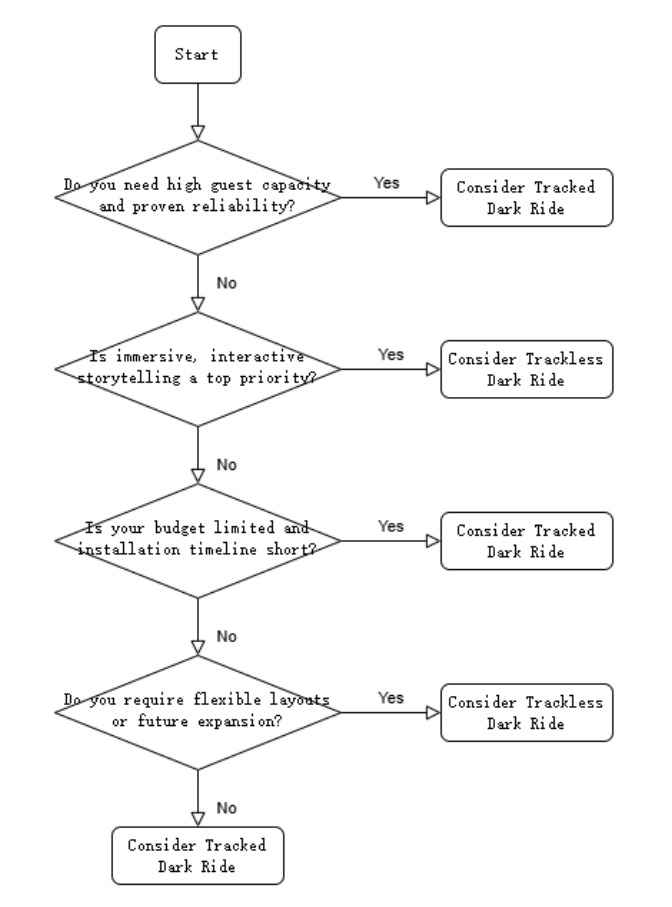
Note: This flowchart helps clarify which system fits your operational and creative needs.
Next Steps
- Review your park’s strategic goals and guest demographics.
- Consult with ride system experts and technology vendors.
- Conduct a site assessment to evaluate space, infrastructure, and technical requirements.
- Compare long-term operational costs and maintenance needs for each system.
- Schedule meetings with creative teams to align storytelling ambitions with ride capabilities.
- Request detailed proposals and safety certifications from suppliers.
- Plan for staff training and guest accessibility accommodations.
- Begin internal discussions to finalize your selection and move forward with attraction development.
For personalized guidance, reach out to industry consultants or technology partners early in your planning process. Careful evaluation ensures your dark ride investment delivers lasting value and guest satisfaction.
Choosing between trackless and tracked dark rides depends on your park’s goals, space, and budget. Each system offers unique strengths and challenges.
Rhodes explains that trackless systems can offer unique pathing and experiences but may come at a higher cost, especially for autonomous versions. He notes that while tracked systems can support more dynamic movements, they require a fixed path and infrastructure.
Key steps for decision-makers include:
- Collaboration with specialists is crucial for thematic storytelling and operational efficiency.
- Engaging experts, such as a volcano specialist, ensures accurate and compelling narratives in ride design.
- Thorough research is necessary to align the ride's theme with educational content, especially in museum settings.
Early consultation with industry experts helps ensure your investment matches long-term park needs and guest expectations.
FAQ
What is the main difference between trackless and tracked dark rides?
Trackless rides use vehicles that move independently without rails. Tracked rides use fixed paths with rails. Trackless systems offer more layout flexibility, while tracked systems provide consistent operation.
Which system is better for high guest capacity?
Tracked dark rides usually support higher guest capacity. Their fixed paths and predictable timing help move more guests per hour, making them ideal for busy parks.
Are trackless rides more expensive to install?
Trackless rides often cost more to install. Advanced technology, software, and integration increase initial expenses. Tracked rides have more predictable and lower upfront costs.
Can trackless rides fit into irregular spaces?
Yes, trackless rides adapt well to unique or irregular spaces. Vehicles can follow custom paths, making them suitable for buildings with unusual shapes or layouts.
How does maintenance compare between the two systems?
Tracked rides use standard parts and procedures, making maintenance easier for most teams. Trackless rides need specialized staff and technical support for software and vehicle systems.
Which system offers better re-rideability?
Trackless rides provide higher re-rideability. Each ride can offer a different experience, encouraging guests to return. Tracked rides deliver the same experience every time.
Is one system safer than the other?
Both systems meet strict safety standards. Trackless rides may offer easier evacuation since vehicles are not confined to rails. Regular inspections ensure safety for both types.
Can I update or retheme my ride easily in the future?
Trackless rides allow easier updates and retheming. Operators can change layouts or add new scenes with less construction. Tracked rides require more effort and cost for major changes.


