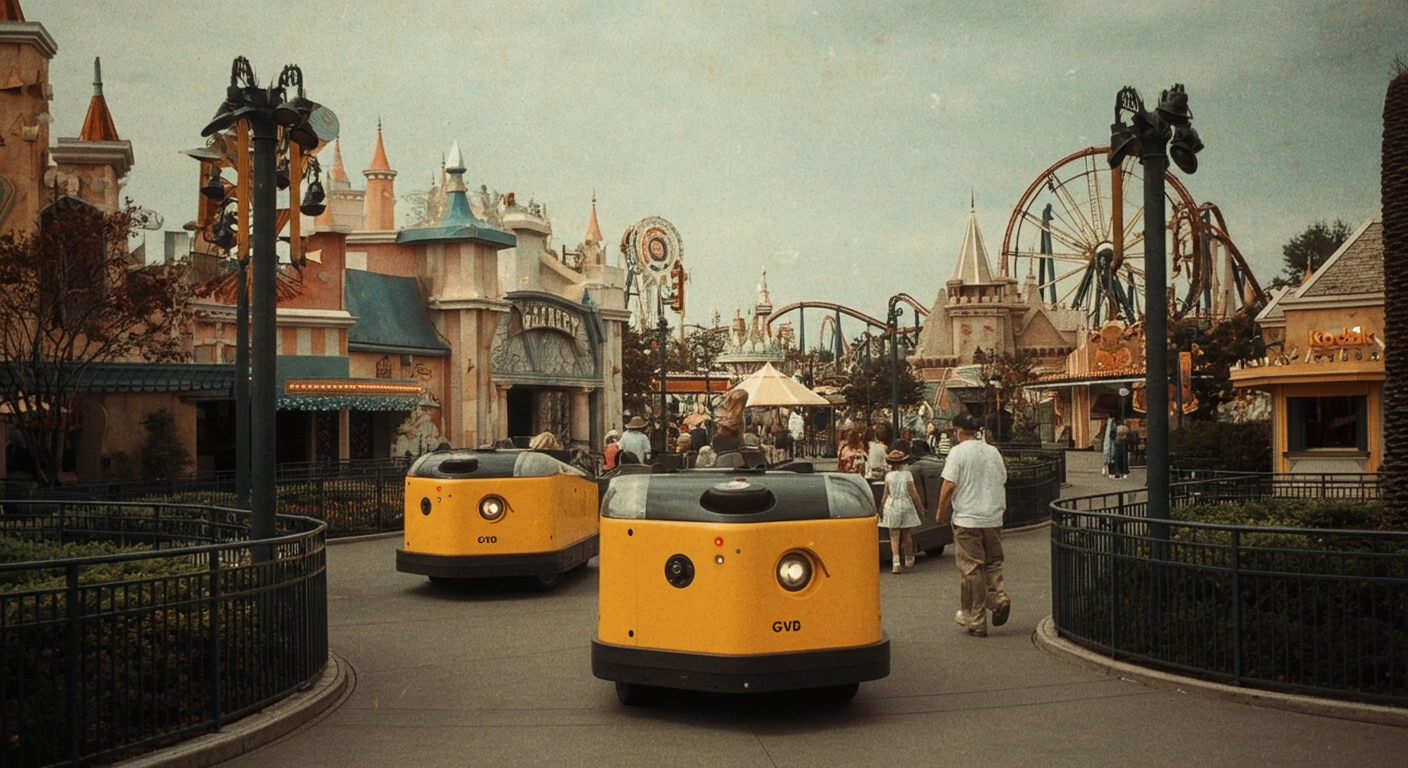
Theme parks now use AGV navigation technology for rides to create dynamic, trackless attractions. This technology moves away from fixed-rail systems, giving designers more freedom and guests a new sense of adventure. Glory Edge and its flagship model, Glory 8, lead this innovation by allowing vehicles to travel unpredictable paths and deliver unique ride experiences each time. These systems are not just limited to theme parks. They also appear in hospitals and other industries, as shown below:
| Application Type | Example Usage |
|---|---|
| Hospitals | Yes |
| Theme Parks | Yes |
Part of our Ultimate Guide series—learn more here.
Key Takeaways
- AGV navigation technology allows theme park rides to operate without fixed tracks, creating unique experiences for guests.
- Trackless systems use advanced technologies like Wi-Fi and RFID to guide vehicles, enabling unpredictable ride paths.
- Safety is a priority; AGVs use sensors to detect obstacles and ensure smooth operation, enhancing guest security.
- Different navigation methods, such as laser and magnetic guidance, offer flexibility and adaptability for ride designs.
- Inductive power transfer keeps AGVs charged without wires, improving safety and ride aesthetics.
- Real-time monitoring systems help maintain ride efficiency and safety by adjusting to changes in the environment.
- AGV technology supports immersive storytelling by synchronizing vehicle movements with show effects and themes.
- Theme parks benefit from AGV systems by creating innovative attractions that keep guests returning for new adventures.
AGV Navigation Technology for Rides
What Is AGV Navigation?
AGV navigation technology for rides uses automated guided vehicles to move guests through attractions without the need for fixed rails. This technology relies on advanced systems that control the path, speed, and movement of each vehicle. In the past, many rides used wired navigation, which kept vehicles on a set path. Today, trackless systems have become more popular. These systems use technologies like localized positioning systems (LPS), Wi-Fi, or RFID to guide vehicles. This shift allows for more creative ride layouts and unpredictable paths, making each ride unique.
The table below shows some key navigation technologies used in theme park rides:
| Navigation Technology | Description |
|---|---|
| Wired Navigation | Used in rides like Epcot's Universe of Energy and The Twilight Zone Tower of Terror for precise control. |
| Trackless Systems | Utilizes LPS, Wi-Fi, or RFID for flexible movement, allowing for varied ride experiences. |
Glory Edge and its flagship model, Glory 8, use advanced trackless navigation. These systems let vehicles move freely, creating immersive and dynamic experiences for guests. For a detailed look at the flexibility advantages of AGV navigation technology, see the comparison page.
AGV Movement and Steering
AGV navigation technology for rides depends on precise movement and steering mechanisms. These systems must handle tight turns, sudden stops, and smooth acceleration to keep guests safe and comfortable. Different rides use different steering methods, depending on the desired experience and layout.
The table below outlines the main movement and steering mechanisms found in modern AGV-based attractions:
| Mechanism Type | Description |
|---|---|
| Wired Navigation | Utilizes fixed paths for AGVs, as seen in rides like Epcot's Universe of Energy and The Twilight Zone Tower of Terror. |
| Trackless Ride Systems | Employs LPS, Wi-Fi, or RFID for navigation, allowing for random movements and varied ride experiences. |
| Differential Speed Control | Uses two independent drive wheels to turn, similar to a tank, ideal for tight spaces. |
| Steered Wheel Control | Similar to car steering, offers smoother turning and is more precise in following paths. |
| Combination Steering | Integrates both differential and steered control, allowing for versatile movement in any direction. |
The Glory 8 model features a sophisticated three-axis motion module. This allows for a wide range of movements, from gentle turns to dynamic spins. The multi-vehicle software coordinates several vehicles at once, making each ride unpredictable and exciting.
Why Theme Parks Choose AGVs
Theme parks select AGV navigation technology for rides for several important reasons:
- AGV systems create unique entertainment experiences. Each passenger can enjoy reactive and personalized interactions.
- These vehicles can move safely at high speeds, which adds to the thrill of the ride.
- The trackless design gives designers more creative freedom. Rides are no longer limited by traditional track layouts.
Glory Edge and Glory 8 demonstrate these benefits. Their advanced systems support both traditional dark rides and hybrid attractions that blend indoor and outdoor segments. The flexibility of AGV navigation technology for rides helps parks deliver new stories and adventures that keep guests coming back.
Navigation Methods
Wire Guidance
How Wire Guidance Works
Wire guidance is one of the earliest navigation methods for AGVs in theme parks. In this system, vehicles follow a fixed path created by wires or magnetic tape embedded in the floor. Sensors on the AGV detect the signal from the wire or tape, guiding the vehicle along a predetermined route. This method ensures that the vehicle stays on course and moves at a controlled speed. Many classic dark rides used wire guidance to deliver a reliable and repeatable experience. For example, early attractions like "Danny the Dragon" used a buried wire emitting a pulsating electromagnetic field. The AGV would sense this field and follow the path automatically, without human intervention.
Pros and Cons
Wire guidance offers several advantages:
- High reliability and predictability
- Simple maintenance for established routes
- Consistent ride experience for every guest
However, it also has some limitations:
- Limited flexibility in changing ride layouts
- Requires installation of wires or tape in the floor
- Not suitable for dynamic or frequently updated attractions
Laser Navigation
How Laser Navigation Works
Laser navigation is a modern method that uses laser scanners to map the environment. The AGV emits laser beams that bounce off walls and objects, creating a digital map of the space. The vehicle then uses this map to determine its position and navigate through the attraction. This technology allows for intelligent pathfinding and real-time adjustments. Some advanced systems, like those used in the Self Driving Vehicle by Cavu Designwerks, rely on laser navigation to move through themed environments with high accuracy.
Key features of laser navigation include:
- Real-time mapping of surroundings
- Ability to adapt to changes in the environment
- Supports complex and unpredictable ride paths
Wire Guidance vs Laser Navigation
| Feature | Wire Guidance | Laser Navigation |
|---|---|---|
| Path Flexibility | Fixed, predetermined | Dynamic, adaptable |
| Installation | Requires floor wires or tape | No floor modification needed |
| Maintenance | Simple for static layouts | Needs software updates |
| Ride Experience | Consistent, repeatable | Unique, can change each ride |
Laser navigation gives designers more freedom to create immersive and ever-changing experiences, while wire guidance is best for rides that need strict control and reliability.
Magnetic Guidance
Magnetic Tape and Field Detection
Magnetic guidance uses magnetic tape or a magnetic track placed on the floor. The AGV has sensors that detect the magnetic field and follow the path. This method evolved from early guide-by-wire systems. Modern AGVs can use magnetic paths or even grid calibration for more precise movement. The technology is similar to wire guidance but uses magnetic signals instead of electrical ones.
- Magnetic tape is easy to install and modify.
- Sensors on the AGV read the magnetic field to stay on course.
- The system can support both simple and complex ride layouts.
Suitability for Parks
Magnetic guidance is popular in theme parks because it balances reliability and flexibility. Parks can update or reroute paths by changing the magnetic tape layout. This method works well for attractions that need both control and the ability to refresh the ride experience. Many AGV systems in theme parks use magnetic localization for these reasons.
Tip: When choosing a navigation method, consider the desired level of flexibility and the complexity of the ride environment.
Vision-Based Systems
Computer Vision and Sensors
Vision-based navigation systems use advanced cameras and computer vision algorithms to guide AGVs through theme park attractions. These systems rely on a high density of map data, which allows for precise navigation even when the environment changes. Operators can deploy vehicles by simply walking them through the desired path once. The AGV then builds a map it can follow repeatedly.
Key components of vision-based navigation include:
- Cameras that capture real-time images of the environment.
- Computer vision algorithms that process these images for advanced localization.
- Object identification features that help the AGV recognize obstacles, lane markings, and signage.
- Barcode reading capabilities for specific ride triggers or checkpoints.
- Stereo cameras that create 360-degree maps, allowing the AGV to understand its surroundings in three dimensions.
- Real-time image analysis that identifies thousands of interest points per second.
Modern visual sensors help AGVs adapt to complex environments. These sensors allow vehicles to avoid obstacles and adjust their path as needed. The Glory 8 model uses vision-based systems to enhance its ability to move freely and safely, even in dynamic or themed settings.
Immersive Ride Applications
Vision-based systems play a key role in creating immersive ride experiences. By using real-time data from cameras and sensors, AGVs can react to changes in the environment. This technology supports unpredictable ride paths and interactive storytelling. For example, vehicles can synchronize their movements with show elements, lighting, or sound effects. This creates a seamless blend between the physical ride and digital storytelling.
Theme parks use vision-based navigation to design attractions that feel alive and responsive. Guests experience rides that adapt to their presence, making each journey unique. The flexibility of vision-based systems allows for creative layouts and multi-dimensional storytelling, as seen in advanced products like Glory 8.
Inertial Navigation
Sensor Integration
Inertial navigation uses a combination of sensors to track the AGV’s position and movement. The system includes gyroscopes, accelerometers, and sometimes transponders embedded in the floor. The gyroscope detects any deviation from the intended path. The computer control system then makes immediate adjustments to keep the vehicle on course. This method achieves high accuracy, often within one inch, and works well in confined spaces or extreme temperatures.
Multi-Technology Coordination
Many theme parks combine inertial navigation with other methods, such as vision-based or magnetic guidance. This multi-technology approach increases reliability and ensures smooth operation. The AGV can switch between navigation modes as needed, adapting to different parts of the attraction. This coordination helps maintain safety and enhances the guest experience.
Natural Feature Navigation
Environment Recognition
Natural feature navigation allows AGVs to recognize and use landmarks in their environment. The system uses cameras and sensors to identify walls, doors, or other fixed objects. The AGV creates a digital map based on these features and uses it to navigate without the need for wires or magnetic tape.
Dynamic Layouts
This method supports dynamic layouts and frequent changes. Operators can update the digital map when the environment changes, and the AGV will adapt its path. Natural feature navigation is ideal for attractions that require flexibility and frequent updates, supporting creative ride designs and new storytelling possibilities.
GPS and RFID
Indoor and Outdoor Use
GPS and RFID are two important technologies in AGV navigation. GPS stands for Global Positioning System. It uses satellites to determine the location of a vehicle. RFID stands for Radio Frequency Identification. It uses radio waves to read information from tags placed in the environment.
Theme parks use GPS mainly for outdoor attractions. GPS helps AGVs know their exact position in large open areas. For example, vehicles in outdoor segments of hybrid rides can use GPS to follow paths and reach specific locations. GPS works best when there is a clear view of the sky. Tall buildings or dense trees can block signals and reduce accuracy.
RFID is more common in indoor environments. Parks place RFID tags at key points along the ride path. AGVs have sensors that read these tags as they pass by. Each tag contains a unique code. The vehicle uses this code to confirm its position and trigger special effects or ride actions. RFID works well in dark rides, show scenes, and areas where GPS signals cannot reach.
| Technology | Best Use Case | Accuracy | Environment |
|---|---|---|---|
| GPS | Outdoor segments | High outdoors | Open spaces |
| RFID | Indoor segments | Very precise | Enclosed spaces |
Note: Glory 8 and other Glory Edge models can combine GPS and RFID for seamless navigation in both indoor and outdoor attractions.
Limitations and Solutions
GPS and RFID each have strengths and challenges. GPS does not work well indoors or in areas with signal interference. RFID tags can be affected by metal objects or electronic noise. Parks must plan carefully to avoid these issues.
To solve GPS limitations, designers use localized positioning systems (LPS) indoors. LPS uses sensors and beacons to guide AGVs where GPS cannot reach. For RFID, parks place tags away from metal surfaces and test for interference before opening the ride.
Some advanced AGV systems, like Glory 8, use both GPS and RFID together. This multi-technology approach helps vehicles switch between navigation modes as needed. For example, a ride vehicle may use GPS outdoors, then switch to RFID and LPS when entering a building. This ensures accurate tracking and smooth transitions.
- Advantages of combining GPS and RFID:
- Reliable navigation in all environments
- Fast position updates for real-time control
- Support for complex ride layouts
Theme parks choose GPS and RFID because they offer flexibility and precision. These technologies help create attractions with unpredictable paths and immersive storytelling. For more details on how navigation methods improve ride flexibility, see our comparison page.
Tip: Using multiple navigation technologies lets parks design rides that move freely and adapt to changing environments. This is part of our Ultimate Guide series—explore more to see how AGV navigation is shaping the future of theme park experiences.
Inductive Power and Energy
Inductive Power Transfer
Inductive power transfer is a key technology for automated guided vehicles (AGVs) in theme parks. This system uses electromagnetic fields to send energy from a power source to the AGV without physical contact. The vehicle receives power through coils installed beneath the ride path or embedded in the floor. This method keeps the ride area free from exposed wires and moving parts, which improves safety for guests and staff.
Theme parks use contactless power solutions to meet the high demands of modern attractions. Providers like VAHLE specialize in integrating power, data, and control for moving equipment. Their systems deliver reliable energy, even when vehicles travel unpredictable paths. The table below highlights some features of advanced inductive power transfer systems:
| Feature | Description |
|---|---|
| Technology | Contactless power solutions for theme park rides and industrial equipment. |
| Application | Designed for high-demand environments, enhancing safety and operational precision. |
| Provider | VAHLE, known for integrating power, data, and control for moving equipment. |
Inductive power transfer supports the flexibility of trackless rides. Vehicles like the Glory 8 can move freely, without being limited by fixed rails or exposed cables. This technology helps create immersive experiences while maintaining a clean and safe environment.
Energy Management for AGVs
Efficient energy management is essential for AGVs in theme parks. Each vehicle must maintain enough power to complete its route and deliver a smooth ride. Operators monitor battery levels and charging cycles to prevent interruptions. Many AGVs use smart battery systems that optimize charging and discharging. These systems extend battery life and reduce downtime.
Some rides use opportunity charging, where vehicles recharge at specific points along the route. This method keeps vehicles ready for operation throughout the day. Energy management systems also track usage patterns and adjust charging schedules based on ride demand. This approach ensures that every vehicle performs reliably, even during peak hours.
Tip: Smart energy management helps parks reduce maintenance costs and improve guest satisfaction.
Integration with Navigation
Inductive power transfer works closely with AGV navigation systems. The vehicle’s control software coordinates power usage with movement and steering. When the AGV approaches a charging zone, the navigation system guides it to the correct position for efficient energy transfer. This integration allows vehicles to operate continuously, supporting complex ride layouts and unpredictable paths.
Advanced AGV models, such as Glory 8, combine inductive power with multi-technology navigation. This combination enables seamless transitions between indoor and outdoor segments. Vehicles can move through themed environments without stopping for manual charging. The result is a smoother, more immersive experience for guests.
Inductive power and energy management play a vital role in the success of trackless rides. These technologies support the creative freedom of designers and the operational needs of theme parks. As part of our Ultimate Guide series, understanding these systems helps explain how innovations like Glory Edge and Glory 8 deliver safe, reliable, and unforgettable attractions.
Ride Control and Safety
Ride Control Systems
Ride control systems form the backbone of AGV-based attractions in theme parks. These systems manage every aspect of vehicle movement, guest safety, and ride performance. Modern ride control platforms use a combination of hardware and software to ensure smooth operation and quick response to any situation.
| Component Type | Description |
|---|---|
| Safety Systems | Include Safety PLCs, laser scanners, video cameras, and light curtains for guest protection. |
| Navigation Technologies | Utilize inertial navigation, laser scanners, optical encoders, buried magnets, and RFID tags. |
| Communication Protocols | Employ EthernetIP communication with a Safety Layer Protocol for system integration. |
Safety PLCs (Programmable Logic Controllers) act as the brain of the system. They process data from sensors and make real-time decisions. Navigation technologies help vehicles stay on course, while communication protocols connect all parts of the system for reliable operation.
Note: Advanced ride control systems, like those in the Glory Edge lineup, support multi-vehicle coordination and seamless integration with show elements.
Safety Sensors
Safety sensors are essential for protecting guests and ensuring reliable ride operation. These sensors constantly monitor the environment and the vehicle’s status.
| Sensor Type | Function |
|---|---|
| Lidars | Used for mapping and obstacle detection, enabling autonomous navigation. |
| Laser Scanners | Essential for detecting obstacles in dynamic environments. |
| Cameras | Crucial for object recognition and precise localization of goods. |
| Proximity Sensors | Detect obstacles to avoid collisions, ensuring safe navigation. |
| Load Sensors | Monitor the weight of items to ensure safe handling and transport. |
Obstacle Detection
Obstacle detection is a top priority in AGV ride safety. Lidars and laser scanners scan the area around each vehicle. If an object or person enters the path, the system detects it instantly. Cameras and proximity sensors add another layer of protection by identifying objects and measuring distances. This technology helps prevent collisions and keeps guests safe.
Emergency Stops
Emergency stop systems allow for immediate action if a hazard appears. Safety PLCs receive signals from sensors and can halt the vehicle within seconds. Emergency stop buttons are also placed along the ride path and in operator stations. These features ensure that staff can quickly respond to any unexpected situation.
Guest Protection
Guest protection involves more than just stopping the vehicle. Light curtains and video cameras monitor guest areas. If someone moves into a restricted zone, the system triggers an alert or stops the ride. Load sensors check that vehicles are not overloaded, which helps maintain safe operation.
Tip: Regular testing and maintenance of safety sensors are required to meet industry standards and keep rides operating safely.
Real-Time Monitoring
Real-time monitoring is vital for both safety and efficiency. The system uses advanced sensors and intelligent object detection to adjust protective fields based on the vehicle’s load and position.
| Feature | Description |
|---|---|
| Sensors and Object Detection | Advanced sensors and intelligent object detection enhance safety by automatically adjusting protective fields based on load dimensions. |
| 3D Cameras and Laser Scanners | Used for measuring load dimensions and misalignment, providing real-time correction values to the navigation system. |
| Control System | Coordinates fleet operations, optimizes routes, and integrates with IT systems to enhance efficiency and safety. |
3D cameras and laser scanners measure the vehicle’s position and alignment. If the system detects a misalignment, it sends correction values to the navigation software. The control system manages all vehicles, optimizing routes and responding to changes instantly.
Note: Real-time monitoring not only improves safety but also helps operators deliver a smooth and enjoyable ride experience for every guest.
Localized Positioning Systems
Precise Location Tracking
Theme parks use localized positioning systems to help AGVs know exactly where they are at all times. These systems combine several technologies to improve accuracy. Sensor fusion plays a key role by blending data from different sensors. This method helps the AGV make better decisions about its position. The Xsens MTi-30 AHRS provides 3D motion tracking and heading information. It helps the vehicle understand its movement and direction. LiDAR sensors create a 3D map of the environment. The AGV uses this map to see walls, objects, and pathways. Odometry supplies motion data from the AGV’s wheels. It helps estimate how far the vehicle has traveled. Together, these technologies allow the AGV to move safely and smoothly through complex ride layouts.
- Sensor fusion blends data from multiple sources.
- Xsens MTi-30 AHRS tracks motion and heading.
- LiDAR builds a 3D map of the ride area.
- Odometry measures wheel movement for position estimates.
Technologies for Themed Environments
Theme parks often have unique and detailed environments. Localized positioning systems must work well in these settings. LiDAR sensors help the AGV recognize themed props and scenery. Cameras and computer vision systems identify landmarks and show elements. RFID tags placed around the ride path give the AGV checkpoints for extra accuracy. The system can adjust to changes in lighting, scenery, or layout. This flexibility supports creative ride designs and allows for updates without major changes to the infrastructure.
| Technology | Role in Themed Environments |
|---|---|
| LiDAR | Maps props, walls, and scenery |
| Cameras | Recognize landmarks and show elements |
| RFID Tags | Provide checkpoints for location accuracy |
| Computer Vision | Adapts to changing environments |
Tip: Localized positioning systems help designers create rides that feel alive and interactive. They support the flexibility advantages explained in our comparison page.
Importance for Immersive Rides
Precise location tracking is vital for immersive ride experiences. When the AGV knows its exact position, it can synchronize with show effects, lighting, and sound. This timing makes the story come alive for guests. Localized positioning also improves safety. The system can detect if a vehicle is off course and make quick corrections. Real-time tracking allows multiple vehicles to move together without collisions. Guests enjoy smoother rides and more believable adventures. Localized positioning systems are a key part of the innovations featured in our Ultimate Guide series. They help attractions like Glory Edge and Glory 8 deliver safe, reliable, and unforgettable experiences.
Tip: Localized positioning systems are essential for modern theme park rides. They enhance safety, support creative storytelling, and make every journey unique.
Comparing Navigation Methods
Wire vs Laser Navigation
Theme parks use both wire and laser navigation for AGV ride systems. Each method has unique features that affect installation, operation, and flexibility. The table below highlights the main differences:
| Feature | Wire Navigation | Laser Navigation |
|---|---|---|
| Installation | Requires digging up the floor to embed a wire | Uses environmental cues, no structural changes |
| Operation | Relies on electrical signals from the wire | Uses lasers to detect reflectors for positioning |
| Flexibility | Fixed routes, less adaptable to changes | More flexible pathing based on detected reflectors |
| Cost | Expensive installation and potential downtime | Generally lower installation costs |
- Wire Navigation: This method uses a wire embedded in the floor. It provides a stable and predictable path for AGVs. However, it is costly to install and makes it hard to change the ride layout later.
- Laser Navigation: This system uses lasers and reflectors placed around the environment. It allows for easier installation and greater adaptability. Designers can update ride paths without major construction.
Tip: Laser navigation gives theme parks more freedom to create new experiences. It supports flexible layouts and quick updates, which is a key advantage explained in our comparison page.
Magnetic vs Vision-Based
Magnetic and vision-based navigation methods also play important roles in theme park rides. Each offers different benefits for ride designers and operators.
- Magnetic Navigation: Uses magnetic tape or markers placed on the floor. AGVs follow the magnetic field to stay on course. This method is reliable and easy to maintain. Parks can change the ride path by moving or replacing the tape. Magnetic navigation works well in environments where lighting or scenery changes often.
- Vision-Based Navigation: Relies on cameras and computer vision algorithms. AGVs use real-time images to map their surroundings and make decisions. This method allows for highly dynamic and interactive rides. Vehicles can respond to show elements, props, and even guests. Vision-based systems support immersive storytelling and unpredictable paths.
| Navigation Type | Strengths | Best Use Case |
|---|---|---|
| Magnetic | Reliable, easy to update, low maintenance | Rides needing simple path changes |
| Vision-Based | Highly flexible, supports dynamic environments | Immersive, interactive attractions |
Vision-based navigation is ideal for attractions that need to adapt quickly and offer unique experiences every time.
Reliability and Maintenance
Reliability and maintenance are critical for AGV navigation systems in theme parks. Each method has its own requirements:
- Wire Navigation: Offers high reliability for fixed routes. Maintenance involves checking the embedded wire and repairing any floor damage. Downtime can occur if the wire needs replacement.
- Laser Navigation: Requires regular calibration of lasers and reflectors. Maintenance is simpler because there are no wires in the floor. Updates to the ride path are quick and do not disrupt operations.
- Magnetic Navigation: Needs periodic inspection of magnetic tape or markers. Replacing tape is straightforward and does not require major construction.
- Vision-Based Navigation: Involves maintaining cameras and cleaning lenses. Software updates keep the system accurate. This method adapts well to changes in the environment, reducing the need for physical repairs.
Tip: Regular maintenance ensures safe and smooth operation. Choosing the right navigation method helps parks balance reliability, flexibility, and cost.
Cost and Scalability
Theme parks must consider both cost and scalability when choosing AGV navigation methods. Each technology has unique financial and operational impacts. Understanding these differences helps parks plan for both current needs and future growth.
Initial Installation Costs
- Wire Guidance: This method often requires digging up the floor to install wires or magnetic tape. The process can be expensive and time-consuming. Parks may need to close sections during installation.
- Laser Navigation: Laser systems use sensors and reflectors placed around the environment. Installation is less invasive and usually faster. Parks can update layouts without major construction.
- Magnetic Guidance: Magnetic tape or markers are easier to install than wires. The cost is moderate, and changes to the ride path are simple.
- Vision-Based Systems: These systems rely on cameras and software. The initial investment in hardware and programming can be higher, but there is no need for floor modifications.
| Navigation Method | Installation Cost | Ease of Expansion | Long-Term Value |
|---|---|---|---|
| Wire Guidance | High | Low | Good for fixed paths |
| Laser Navigation | Moderate | High | Flexible |
| Magnetic Guidance | Moderate | Moderate | Adaptable |
| Vision-Based | High | Very High | Best for innovation |
Scalability for Growing Parks
Scalability means how easily a park can add new vehicles or change ride layouts. Parks that want to expand or refresh attractions often choose flexible systems.
- Wire Guidance: Adding new routes or vehicles can be difficult. Each change may require new wires and construction.
- Laser and Vision-Based: These methods support quick updates. Parks can add new paths or vehicles with minimal disruption.
- Magnetic Guidance: Offers a balance. Parks can move or add magnetic tape as needed.
Note: Advanced systems like those in the Glory Edge lineup, including Glory 8, use scalable navigation. Parks can grow their attractions without major downtime.
Long-Term Savings
While some systems cost more upfront, they may save money over time. Flexible navigation reduces the need for future construction. Parks can update stories, add scenes, or change routes to keep guests returning.
- Vision-based and laser navigation offer the best long-term value for parks focused on innovation.
- Magnetic guidance is a good choice for parks that want moderate flexibility at a lower cost.
Tip: Part of our Ultimate Guide series—for a detailed comparison of navigation flexibility and cost, see our comparison page.
Choosing the right navigation method helps parks control costs and plan for the future. Scalable systems support creative storytelling and new ride concepts, making them a smart investment for modern attractions.
Guest Experience and Innovation
Safety and Reliability
Theme parks rely on AGV navigation technology for rides to create safe and reliable attractions. Automated guided vehicles use advanced sensors and control systems to minimize human error. This technology helps protect guests and maintain smooth operation. Vehicles follow pre-programmed routes, which reduces the chance of mistakes and keeps rides consistent. Systems like REVO-GT show how automation can improve transportation efficiency and reliability for passengers.
- AGV systems reduce risks by limiting manual intervention.
- Sensors and software monitor vehicle movement and respond quickly to changes.
- Pre-set routes help operators deliver a dependable experience every time.
Guests feel more secure when rides use automated systems. Parks can focus on delivering fun while technology handles safety.
Immersive Storytelling
AGV navigation technology for rides opens new possibilities for storytelling. Trackless vehicles move freely through themed environments, allowing designers to create unpredictable paths and dynamic scenes. Attractions like Glory Edge and Glory 8 use multi-vehicle coordination and three-axis motion modules to transport guests into imaginative worlds. Vehicles can synchronize with lighting, sound, and show effects, making each ride unique.
Designers blend physical sets with digital media to build immersive experiences. Guests may see scenes change around them or interact with ride elements. The flexibility of trackless systems supports creative layouts and multi-dimensional storytelling. Parks can update attractions easily, keeping stories fresh and engaging.
Tip: Immersive rides often use localized positioning systems to match vehicle movement with show effects. This technology helps create seamless adventures for guests.
Future Trends in AGV Rides
Theme parks continue to innovate with AGV ride technology. New trends focus on interactive experiences and advanced motion systems. Attractions now blend traditional dark ride features with modern technologies like 3D graphics and video projection mapping.
The integration of advanced interactive technologies, seamless ride experiences, and immersive media-based attractions are key trends shaping the future of AGV ride technology. Notably, the use of gesture-based controls and the combination of motion systems with high-quality media content are significant developments.
Emerging features include:
- Trackless AGV rides that operate without power cables
- Enhanced motion systems with 4D effects
- Blending of physical sets with digital media for richer storytelling
Parks use these innovations to create attractions that adapt to guest preferences and deliver memorable adventures. The Glory Edge lineup, including Glory 8, demonstrates how technology can push the boundaries of entertainment. As part of our Ultimate Guide series, these advancements show the flexibility and creative potential of modern ride systems.
Conclusion
AGV navigation technology for rides helps theme parks create attractions that are safe, reliable, and immersive. Glory Edge and Glory 8 show how advanced systems can support creative layouts and dynamic guest experiences. Parks use these innovations to deliver new adventures and adapt to future trends.
Part of our Ultimate Guide series—explore more to see how technology brings flexibility and excitement to theme park rides.
FAQ
What is an AGV in theme parks?
An AGV, or Automated Guided Vehicle, is a driverless vehicle that moves guests through attractions. It uses advanced navigation technology instead of fixed rails. This allows for flexible ride paths and immersive experiences.
How does trackless navigation improve rides?
Trackless navigation lets vehicles move freely without rails. Designers can create unpredictable paths and dynamic scenes. This flexibility supports creative storytelling and unique guest experiences.
For more on flexibility, see our comparison page.
What safety features do AGV rides use?
AGV rides use sensors like LiDAR, cameras, and proximity detectors. These systems watch for obstacles and monitor guest safety. Emergency stop buttons and real-time monitoring help keep everyone safe.
Can AGV rides operate both indoors and outdoors?
Yes. AGV rides can switch between GPS for outdoor segments and RFID or vision-based systems indoors. This combination ensures accurate navigation in any environment.
What makes Glory 8 different from other AGV systems?
Glory 8 features a three-axis motion module and multi-vehicle software. It supports unpredictable paths, dynamic movement, and immersive storytelling. The system adapts to both traditional dark rides and hybrid attractions.
How do AGVs get power during operation?
Most AGVs use inductive power transfer. Coils under the floor send energy wirelessly to the vehicle. This method keeps the ride area safe and free from exposed wires.
Why do theme parks prefer AGV navigation technology?
Theme parks choose AGV navigation for its safety, flexibility, and ability to create new ride experiences. The technology supports creative layouts and helps parks update attractions easily.
Part of our Ultimate Guide series—explore more about AGV technology in theme parks.


