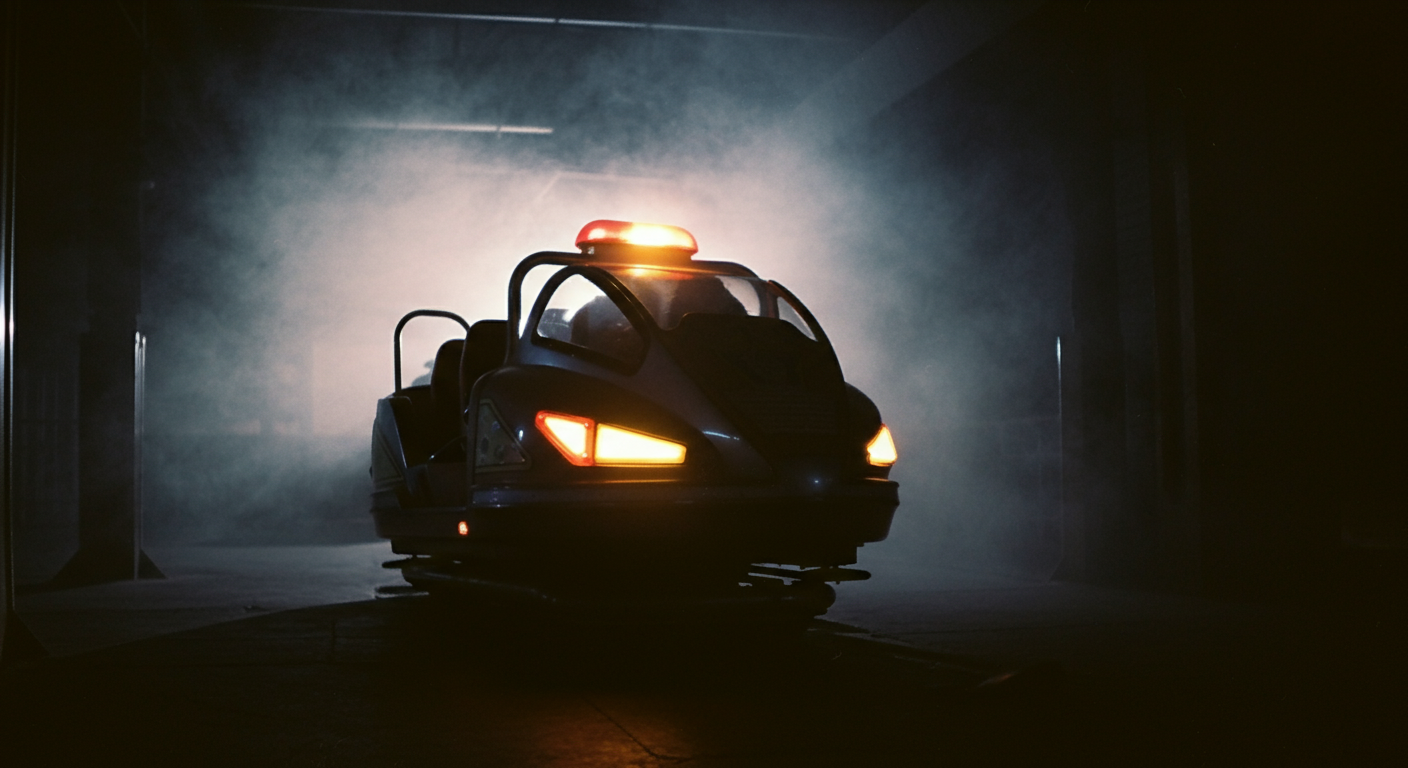
Trackless dark ride systems use autonomous vehicles to move guests through immersive environments without fixed tracks. They provide greater flexibility to design unique layouts and create non-linear stories that increase visitor engagement. These systems offer cost-effective installation and simplified maintenance, since they need less infrastructure and have fewer mechanical parts.
- The global dark-ride system market reached USD 824 million in 2024.
- Projections show growth to USD 1,870 million by 2034, with a 12.2% CAGR.
Key Takeaways
- Trackless dark ride systems offer creative freedom, allowing for unique layouts and non-linear storytelling that enhance guest engagement.
- These systems are cost-effective, requiring less infrastructure for installation and simplifying maintenance with fewer mechanical parts.
- Advanced technology, including sensors and wireless communication, ensures safe and smooth operation of vehicles without fixed tracks.
- Trackless systems improve guest flow and capacity by allowing flexible loading and unloading, reducing wait times and enhancing overall experience.
- The ability to easily update or re-theme attractions supports long-term value and adaptability to changing trends and guest expectations.
- Trackless dark rides can be installed in compact or irregular spaces, maximizing available area for theming and guest interaction.
- Safety features, such as automatic obstacle detection and emergency protocols, protect guests while maintaining high operational standards.
- Choosing the right supplier is crucial; look for proven technology, strong support, and scalability options to ensure long-term success.
Trackless Dark Ride Systems Overview
Definition and Key Features
Trackless dark ride systems are advanced attraction solutions that use autonomous vehicles to transport guests through themed environments without fixed rails or tracks. These systems rely on wireless guidance and onboard technology, providing designers and operators with the ability to design flexible layouts and dynamic experiences. Rides can move in any direction, pause at show scenes, or even split and rejoin groups of vehicles. This flexibility supports creative storytelling and operational efficiency.
Key features that distinguish trackless dark ride systems from traditional tracked rides include:
- Creative freedom and storytelling flexibility. Designers can create complex layouts and non-linear story paths.
- Lower installation costs. Reduced infrastructure requirements make installation more cost-effective.
- Simplified maintenance and higher uptime. Fewer mechanical parts mean easier maintenance and less downtime.
- Built-in safety advantages. Vehicles can return to a safe zone automatically if technical issues occur.
- Lower long-term costs. Over time, these systems often prove more economical than traditional options.
Core Components
Understanding the main components is essential to how trackless dark ride systems function effectively. These systems use advanced technology, including high-precision sensors and show control software, to ensure smooth movement and immersive experiences. ehicles navigate without rails, enabling unique ride paths and better adaptation to available space. Safety features include continuous battery recharging and easy maintenance access. Vehicles can also be customized with options such as LED lighting and seat fabrics to match specific themes.
Vehicles
Vehicles serve as the heart of trackless dark ride systems. Each vehicle operates independently, guided by onboard computers and sensors. They can be programmed to move in any direction, rotate 360 degrees, or synchronize with show elements. This independence allows operators to adjust ride pacing, group sizes, and routing when necessary. Vehicle designs can also be selected to align with the attraction’s story, ranging from futuristic pods to classic cars.
Control Technology
Advanced control technology manages the movement and safety of each vehicle. Centralized software communicates wirelessly with all vehicles, sending real-time instructions for speed, direction, and timing. High-precision sensors track vehicle positions and prevent collisions. The system can adapt to changes in the environment or guest flow, helping maintain smooth and reliable operations. Remote diagnostics and software updates further reduce downtime and support long-term performance.
Themed Environments
The guest experience is enhanced through the integration of vehicles and control systems with immersive themed environments. Trackless dark ride systems allow spaces to be designed without visible tracks, improving visual storytelling. Show elements, lighting, and special effects can be placed freely throughout the ride area. This flexibility enables seamless scene transitions and unexpected movements or interactions. Environments can also be updated or re-themed more easily, supporting long-term attraction value.
How Trackless Systems Operate
AGV Technology
Trackless dark ride systems are powered by Automated Guided Vehicle (AGV) technology. AGVs use advanced spatial positioning to move vehicles smoothly through themed environments. This approach enables attractions to be designed without fixed rails, providing greater freedom in layout and storytelling. AGV systems incorporate several key features:
- Spatial positioning technologies like laser and visual SLAM (Simultaneous Localization and Mapping) help vehicles understand their location in real time.
- A central control system manages multiple vehicles simultaneously, adjusting speed, direction, and timing to improve agility and operational stability.
- Vehicles as part of the storytelling experience. The entire themed space can be utilized, maximizing guest engagement and overall operational efficiency.
This approach supports ride experiences that feel dynamic and less predictable, enhancing overall guest immersion.
Control and Positioning
Wireless Systems
Wireless communication connects the central control system with each vehicle, eliminating the need for physical connections or visible infrastructure. Instructions are transmitted in real time, directing vehicles to move, stop, or change direction. Ride programming can be updated remotely, making it easier to adjust operations or refresh the attraction over time.
Sensors and Safety
Sensors play a critical role in safe operation. Each vehicle uses a combination of laser scanners, cameras, and proximity sensors to detect obstacles, monitor surroundings, and prevent collisions. When a potential hazard is identified, vehicles can stop or reroute automatically. This safety layer protects guests and staff while supporting reliable day-to-day operations.
Movement Dynamics
Trackless systems offer significant flexibility in vehicle movement. Vehicles can rotate 360 degrees, move forward or backward, and travel side-to-side. This range of motion enables complex ride choreography and precise synchronization with show elements. Speed can be finely controlled to manage guest flow and pacing—for example, slowing vehicles at key story moments or accelerating transitions between scenes. This adaptability supports both creative storytelling and efficient operations.
Tip: When evaluating trackless systems, movement dynamics should be considered for their impact on both guest experience and operational throughput. Flexible vehicle motion often contributes to higher satisfaction and more effective use of available space.
Advantages of Trackless Dark Ride Systems
Creative Flexibility
Trackless dark ride systems offer a high level of creative freedom by breaking away from traditional ride patterns. Attractions can be designed with unique vehicle paths, scene revisits, and unexpected story developments. The ride "De Windjager" demonstrates this flexibility, where vehicles return to previously visited rooms, enabling layered narratives and surprising guest experiences. Visuals and sound can take a leading role in storytelling, reducing reliance on characters or narration. This approach opens new possibilities for immersive storytelling and innovative ride design.
- Vehicles can revisit scenes multiple times, supporting non-linear storytelling.
- Visual and audio cues can guide guests, creating a more interactive environment.
- The system challenges conventional dark ride formats, expanding creative possibilities.
Tip: Trackless dark ride systems support the creation of memorable experiences that stand out in a competitive attraction market.
Capacity and Guest Flow
Trackless dark ride systems enhance operational efficiency through flexible loading and unloading strategies. Configurations such as dual loading platforms and optimized boarding layouts help reduce wait times and maximize ride capacity. Entertainment elements integrated into queue areas keep guests engaged, improving the overall experience. The table below illustrates how specific design principles impact capacity and guest flow:
| Design Principle | Impact on Capacity and Flow |
|---|---|
| Dual loading platforms | Reduces wait times and enhances throughput |
| Continuous track systems | Maintains immersion while increasing ride capacity |
| Efficient boarding layouts | Improves guest flow and minimizes downtime |
| Entertainment elements in queues | Mitigates perceived wait times, enhancing guest experience |
Vehicle movement and timing can be adjusted to match demand, supporting a steady and efficient flow of guests throughout the day.
Layout and Space Use
Trackless dark ride systems optimize space utilization by eliminating the need for fixed tracks. This allows for compact and versatile ride environments where nearly every available area can be used for theming, show elements, or equipment. High precision navigation, such as LiDAR technology, lets vehicles move accurately through complex indoor spaces. The table below highlights key advantages:
| Advantage | Description |
|---|---|
| Flexibility | The system allows for versatile and adaptable ride environments without fixed tracks. |
| Compact Design | Requires minimal space, maximizing available area for theming and equipment. |
| High Precision Navigation | Utilizes LiDAR technology for precise navigation in complex indoor spaces. |
Layouts can be adapted to existing buildings or challenging spaces, offering greater flexibility during planning and design.
Maintenance and Safety
Trackless dark ride systems simplify maintenance while enhancing operational safety. Vehicles are designed with fewer external mechanical components, reducing wear and tear and lowering the frequency of repairs and inspections. The absence of rails and complex mechanical control systems contributes to higher ride availability and more consistent operation.
Vehicles typically operate on rechargeable batteries, supporting 12 to 14 hours of use with minimal upkeep. Maintenance tasks can be scheduled efficiently, resulting in reduced downtime. Each vehicle operates with an independent drive and control system, minimizing the risk of system-wide failures and simplifying power management during daily operations.
Tip: When a technical issue occurs, vehicles automatically return to a station or safe zone. This feature protects guests and staff, ensuring operational reliability during unexpected events.
Advanced sensors and automated safety controls further enhance safety performance. Vehicles continuously detect obstacles and respond immediately to potential hazards. In the event of technical issues or power failures, vehicles can automatically return to a station or safe zone, protecting both guests and staff while maintaining high safety standards.
- Fewer mechanical parts mean easier maintenance and less downtime.
- Vehicles operate independently, reducing the risk of system-wide failures.
- Automated safety features protect guests and staff during technical issues.
- Rechargeable batteries support long operating hours with minimal upkeep.
As a result, trackless dark ride systems deliver reliable performance and consistent guest experiences while helping operators control costs and minimize operational risks.
Trackless vs. Tracked Rides
Technology Comparison
Two main options exist for dark ride systems: trackless or tracked. Trackless systems use autonomous vehicles guided by wireless technology and sensors, allowing free movement within the ride space. Vehicles can be programmed to follow any path, rotate, or group together. Tracked systems use fixed rails or guideways, with vehicles following a predetermined route that requires major modifications to change.
| Feature | Trackless System | Tracked System |
|---|---|---|
| Vehicle Guidance | Wireless, sensor-based | Physical rails or guideways |
| Path Flexibility | High (programmable, non-linear) | Low (fixed, linear) |
| Layout Adaptability | Easily reconfigurable | Difficult to change |
| Maintenance Access | Simple (no tracks to maintain) | Requires track inspection/repair |
Trackless technology provides higher flexibility. Ride paths can be updated and new scenes added through software modifications, whereas tracked systems require physical changes. Trackless vehicles incorporate advanced batteries and onboard computers, while tracked vehicles rely on mechanical connections and external power sources.
Note: Trackless systems often integrate with modern show control and safety systems. This integration supports advanced storytelling and operational efficiency.
Guest Experience
Trackless rides enable dynamic movement and surprise elements. Vehicles can rotate, pause, or split into groups, supporting non-linear stories and interactive moments. Guests may not predict the vehicle's next movement, enhancing excitement.
Tracked rides offer a predictable journey, following a visible path. While strong narratives can still be designed, flexibility is limited and the experience remains consistent. This consistency may benefit certain themes or storylines.
| Experience Aspect | Trackless System | Tracked System |
|---|---|---|
| Storytelling | Non-linear, interactive | Linear, consistent |
| Surprise Factor | High | Low |
| Repeatability | Variable (different paths possible) | Fixed (same path each ride) |
| Immersion | Enhanced (no visible tracks) | Limited by visible infrastructure |
Trackless systems allow for immersive environments, with the absence of tracks improving visual quality and enabling show elements to be placed throughout the ride area.
Installation and Operations
Trackless systems require less physical infrastructure, eliminating the need for rails or guideways. This reduces construction time and allows easier integration into existing buildings. Layouts can be adapted for unique spaces or future changes.
Tracked systems require precise rail installation and supporting structures, which can be time-consuming and limit future layout adjustments. Maintenance for tracked rides often involves inspecting and repairing rails, while trackless systems focus on vehicle and software upkeep.
Tip: Trackless systems support remote diagnostics and software updates, allowing many issues to be resolved without shutting down the entire attraction.
Trackless systems offer lower long-term maintenance needs and the ability to update or re-theme attractions with minimal disruption. This flexibility supports long-term value and operational efficiency.
Decision Factors
Multiple factors influence the choice between trackless and tracked ride systems. Each factor affects attraction performance and operational management over time. The selected system should align with project goals, guest expectations, and site conditions.
Consider the following key factors:
- Proven stability and strong safety records
- Intuitive controls and user interface
- Built-in safety mechanisms, such as automatic braking and low-center-of-gravity design
- Flexibility for indoor or outdoor use
- Usage environment and terrain compatibility
- Passenger capacity and weight limits
- Maintenance requirements and long-term usability
- Power source and energy efficiency
- Speed control and navigation system
- Turning radius and maneuverability
- Durability and reliability
- Transparent manufacturer support and service
Evaluation of the installation environment is recommended. Trackless systems provide adaptability for complex indoor layouts or multi-use spaces, while tracked systems may be better suited for outdoor environments or areas with challenging terrain. Assessment should include how each system handles different surfaces and weather conditions.
Safety remains a top priority. Vehicles should include built-in safety features such as automatic braking and obstacle detection. Trackless vehicles typically incorporate advanced sensors and software for collision avoidance, while tracked rides rely on mechanical safety systems and physical barriers. Manufacturer safety records and documentation should be reviewed.
Passenger capacity affects throughput and overall guest satisfaction. Trackless systems allow flexible vehicle grouping and variable ride pacing, whereas tracked systems provide consistent but less flexible capacity. Management of guest flow and boarding efficiency should be compared between systems.
Maintenance and long-term usability impact operational costs. Trackless systems require regular software updates and battery management, while tracked rides need ongoing inspection of rails and mechanical components. Consideration should be given to the availability of spare parts, technical support, and manufacturer warranties.
Performance and speed control influence the guest experience. Trackless vehicles offer programmable movement and dynamic storytelling, while tracked rides deliver predictable journeys. Selection should align with creative objectives and operational requirements.
The table below summarizes how decision factors compare:
| Decision Factor | Trackless System | Tracked System |
|---|---|---|
| Flexibility | High | Low |
| Safety Systems | Advanced sensors/software | Mechanical/barrier-based |
| Maintenance | Software/battery focus | Rail/mechanical focus |
| Capacity | Variable/grouping options | Fixed |
| Terrain Compatibility | Indoor/outdoor adaptable | Terrain-dependent |
| Manufacturer Support | Remote diagnostics | On-site service |
Tip: Requesting demonstrations and site visits is recommended before making a final decision. Real-world testing helps evaluate how each system performs in the specific installation environment.
Weighing these factors carefully ensures that the selected system supports creative goals, operational efficiency, and long-term success.
Cost Structure and Evaluation
Main Cost Elements
Understanding the main cost elements of trackless dark ride systems is essential for budgeting and assessing long-term value. Each component of the system contributes to overall investment and operational efficiency.
Vehicles
Vehicles form the core of the investment. Costs include advanced navigation, battery systems, and custom theming. Each vehicle is equipped with sensors, drive units, and safety features. Different sizes and designs can be selected to match the attraction, and the total number of vehicles affects ride capacity and guest flow.
Control Systems
Control systems manage vehicle movement and safety. Investment covers central software, wireless communication, and real-time monitoring. These systems allow ride paths to be adjusted and programming to be updated. Remote diagnostics and support tools enhance reliability, reduce downtime, and improve operational efficiency.
Integration
Integration links vehicles, control systems, and themed environments. Show elements, lighting, and audio must be connected with the ride system, requiring careful planning and technical expertise. Collaboration with multiple suppliers or partners may be necessary. Effective integration ensures smooth operation and a seamless guest experience.
Maintenance
Maintenance costs include regular inspections, battery management, and software updates. Fewer mechanical parts reduce wear and tear, simplifying upkeep. Preventive maintenance schedules, spare parts planning, and technical support contribute to consistent ride operation and minimal downtime.
Tip: Budget planning should account for staff training. Properly trained teams can efficiently handle routine maintenance and basic troubleshooting.
Lifecycle Considerations
Evaluation should extend beyond initial costs to consider the full lifecycle of a trackless dark ride system. Long-term value derives from reliability, flexibility, and ease of updates.
- Durability: High-quality vehicles and control systems can last many years with proper care, reducing replacement costs over time.
- Upgradability: Software updates and environment re-theming can be performed without major construction, supporting future changes and new storylines.
- Energy Efficiency: Modern battery systems reduce energy consumption and operating costs.
- Resale Value: Well-maintained systems retain value if upgrades or changes are made.
| Lifecycle Factor | Impact on Value |
|---|---|
| Durability | Reduces long-term expenses |
| Upgradability | Supports future enhancements |
| Energy Efficiency | Lowers operating costs |
| Resale Value | Preserves investment |
Comprehensive evaluation of both upfront and ongoing costs helps select the most suitable system for the attraction, ensuring operational efficiency, long-term flexibility, and a positive guest experience.
Application Scenarios
Theme Parks
Trackless dark ride systems are widely adopted in theme parks. These systems allow attractions to stand out in a competitive market by supporting unique layouts and non-linear paths. Flexible ride design enables full use of available building space for storytelling or guest interaction. Updating or re-theming attractions is also simpler, enhancing long-term value.
Operational efficiency improves with trackless vehicles, which support flexible loading and unloading zones. Ride pacing can be adjusted to match demand during peak times, and maintenance is simplified because vehicles operate independently—if one vehicle requires service, others can continue running, minimizing downtime.
Tip: When planning a new attraction, trackless systems can maximize space utilization and enhance guest experiences.
IP-Based Attractions
Intellectual property (IP) is often used to attract broad audiences. Trackless dark ride systems facilitate the integration of popular stories and characters. Vehicles can be programmed to move in sync with show elements, sound, and lighting, creating seamless, immersive environments.
For example, in SpongeBob's Crazy Carnival Ride, character-driven storytelling combines with interactive gameplay. Guests participate in the story as vehicles adjust in real time to sound, animatronics, and media cues based on location, creating personalized experiences.
Another example, ChronoJam, uses dynamic vehicle movement through different musical genres, offering multiple narrative paths. The programmable motion base allows experiences to be adjusted for various audiences or events.
| Feature | Benefit for IP-Based Attractions |
|---|---|
| Real-time show control | Personalized guest experiences |
| Dynamic vehicle movement | Multiple story paths and outcomes |
| Integration with media/lighting | Enhanced immersion and flexibility |
Trackless systems allow IP-based attractions to be refreshed or expanded without major construction, supporting adaptability to evolving trends and guest expectations.
Museums and Education
Trackless dark ride systems can transform museums and educational centers by guiding visitors through exhibits in interactive ways. Vehicles can pause at key displays, rotate for better viewing, or split into smaller groups for focused experiences.
Accessibility is enhanced, as vehicles can accommodate wheelchairs or special seating. The absence of fixed tracks reduces barriers in exhibit design and facilitates updates or additions with minimal disruption. Programmable trackless systems allow different tours or educational themes using the same physical space.
Note: Museums benefit from the programmable nature of trackless systems, which allows different tours or educational themes to be offered using the same physical space.
These systems support both entertainment and learning objectives, creating engaging experiences that encourage repeat visits and positive word-of-mouth.
Family Centers
Family entertainment centers (FECs) are evolving rapidly, and trackless dark ride systems play a key role in this transformation. These systems enable attractions that appeal to a wide range of ages and group sizes. The flexibility of trackless technology supports the design of experiences that fit available space and target audiences.
Several advantages are associated with implementing trackless systems in family centers:
- Flexible, non-linear layouts allow ride paths to twist, turn, or even split, making each visit unique.
- Reduced infrastructure demands: Trackless systems do not require fixed rails, enabling installation in existing buildings or adaptation to unconventional spaces.
- Simplified maintenance: Fewer mechanical parts lead to lower repair time and costs.
- Support for immersive, media-driven experiences: Advanced vehicle technology allows synchronization of movement with lighting, sound, and interactive elements.
These benefits are evident in real-world attractions. For example, the Lego Factory Adventure Ride at LEGOLAND New York uses trackless vehicles to move guests through a series of interactive scenes. Vehicles rotate and pause at key moments, creating a dynamic environment that enhances storytelling and guest engagement, while encouraging repeat visits.
Trackless systems also offer operational flexibility. Ride pacing can be adjusted to match demand, adding more vehicles during peak times and reducing the number of vehicles when traffic slows, saving energy and minimizing wear.
Cost considerations are important when planning a trackless attraction for a family center. While the investment in advanced vehicles and control systems can be significant, savings are realized in infrastructure and long-term maintenance. The ability to update or re-theme the attraction with minimal disruption adds adaptability, supporting long-term value and responsiveness to changing trends.
Tip: Trackless dark ride systems allow attractions to grow with a business. Small layouts can be expanded as operational needs evolve.
Overall, these systems improve guest satisfaction by delivering experiences that feel fresh and interactive. Trackless rides help operators stand out in a competitive market and provide value to both guests and operations.
Supplier Selection
Technology Maturity
Before selecting a supplier, it is important to assess the maturity of their technology. Mature systems demonstrate proven reliability and reduce operational risks. Suppliers should provide evidence of successful installations across multiple venues, showing long-term performance rather than just recent launches.
The frequency of technology updates indicates innovation, while stability remains essential. Vehicles and control systems that have undergone several generations of improvement often deliver superior results. References from operators using the same system can provide additional insight into real-world performance.
Tip: Demonstrations or site visits allow evaluation of technology readiness for specific projects.
| Evaluation Criteria | What to Look For |
|---|---|
| Operational Track Record | Years in service, multiple installations |
| Update Frequency | Regular improvements, stable releases |
| R&D Investment | Evidence of ongoing development |
| User References | Feedback from current operators |
Safety Standards
Safety is a top priority when selecting a supplier. Systems should comply with international safety certifications, such as EN 13814 or ASTM F2291, reflecting adherence to best practices. Redundant safety systems, including multiple sensors and emergency protocols, enhance protection for guests and staff. Transparent incident reporting, maintenance manuals, and staff training programs indicate a supplier’s commitment to safety.
It is important to verify whether the supplier uses redundant safety systems. Vehicles equipped with multiple sensors and emergency protocols enhance operational safety. Reviewing the supplier’s history with incident reporting and resolution provides insight into reliability. Suppliers who maintain transparent safety records build trust. Maintenance manuals and staff training programs should also be evaluated to ensure proper operational standards.
Note: Suppliers providing regular safety audits and training help maintain high standards over time.
- International certifications (EN, ASTM)
- Redundant safety systems
- Transparent incident reporting
- Comprehensive training programs
Scalability
Scalability is essential for long-term operational growth. Systems should allow the addition of vehicles or layout expansions without major structural changes. Suppliers must provide guidance on modular expansion, software upgrades, increased capacity, and re-theming options. Scalable solutions enable attractions to adapt to changing business needs.
Suppliers should provide clear guidelines for adding new vehicles or updating control software. It is important to verify whether the system can handle higher guest volumes or incorporate new story elements. Scalable solutions enable adaptation to changing business needs.
| Scalability Factor | Supplier Response Should Include |
|---|---|
| Modular Expansion | Ability to add vehicles or scenes easily |
| Software Upgrades | Support for new features and updates |
| Capacity Increase | Guidelines for higher throughput |
| Re-theming Flexibility | Options for changing themes or layouts |
Tip: Suppliers offering long-term support for upgrades and expansion help ensure investments remain relevant as operational needs evolve.
Support and Customization
Strong support and customization are essential when selecting a supplier for trackless dark ride systems. Reliable support facilitates installation, operation, and future updates, while customization enables tailoring the ride experience to specific brand, story, and guest requirements.
Suppliers offer a range of services, including assistance with system design, engineering, and integration. Some provide turnkey solutions, handling all aspects from concept to operation, while others focus on modular systems, allowing additional features or attraction expansions over time.
Suppliers who assist with early-stage or “blue sky” development help align technical possibilities with creative goals. They often support vehicle customization, media content integration, and interactive system design, including unique layouts, special effects, or themed environments.
The table below shows examples of support and customization services from leading suppliers:
| Supplier | Services Offered |
|---|---|
| Simtec Systems | Individual system design, modular realization, custom attraction engineering, engineered dark ride solutions tailored to specific stories. |
| OES Ride Systems | Full-service turnkey provider, customized ride vehicles, interactive gaming systems, custom media content, and various degrees of freedom in ride design. |
These services provide multiple advantages for operators:
- Full-service support, from initial concept to daily operation.
- Assistance with creative development and technical planning.
- Customization of ride vehicles to align with theme or story.
- Integration of custom media content, such as video, audio, or interactive elements.
- Support for track layouts and interactive systems, enhancing guest engagement.
Tip: Suppliers offering ongoing technical support and training help ensure smooth operation and maintenance of the system.
Ongoing technical support and training ensure teams can operate and maintain the system confidently. Evaluating how suppliers manage updates and troubleshooting helps minimize downtime and ensures smooth attraction operation. Customization options enable attractions to be refreshed or adapted to new trends without major changes.
Selecting a supplier with strong support and flexible customization enhances the ability to deliver a unique and reliable guest experience while aligning with creative and operational objectives.
Buyer Risks and Mistakes
Integration Challenges
Integration challenges may arise when installing trackless dark ride systems. These systems rely on the smooth connection of vehicles, control software, show elements, and themed environments. Without careful integration planning, there is a risk of delays and unexpected costs. Coordination is required between multiple suppliers and technical teams, each of which may use different standards or communication protocols.
A clear integration plan should be created early in the project, outlining how each system will connect and identifying responsibility for each step. A table can be used to track integration tasks:
| Integration Area | Responsible Party | Status |
|---|---|---|
| Vehicle Control | Ride Supplier | In Progress |
| Show Lighting | AV Contractor | Pending |
| Audio Synchronization | Media Team | Complete |
Tip: Regular meetings among all partners help identify potential issues before they become major problems.
Early testing of all integrated systems is recommended before opening the attraction to detect and resolve timing, communication, or safety issues.
Maintenance Planning
Maintenance planning should begin from the start. Trackless systems use advanced vehicles and software, and without scheduled inspections and updates, there is a risk of unexpected downtime. Staff training for daily checks and basic troubleshooting is essential.
Spare parts and tools should be kept on hand to enable rapid issue resolution. A maintenance log is recommended to track repairs, battery changes, and software updates.
- Preventive maintenance should be scheduled weekly.
- Software should be updated according to supplier recommendations.
- Batteries and worn parts should be replaced on a set schedule.
Note: Well-planned maintenance ensures the ride remains safe and reliable while extending the life of the investment.
Guest Experience Oversights
Ensuring a positive experience for every guest requires attention to key operational details. Oversights in guest boarding and exiting can lead to discomfort or confusion. Clear instructions and accessible platforms improve accessibility and comfort for all visitors.
Pacing and timing are critical. Vehicles that move too quickly or slowly can cause guests to miss important scenes. Testing the ride with different groups helps determine the optimal speed and timing.
- Provide clear signage and staff guidance at loading areas.
- Adjust vehicle speed to match story moments.
- Gather feedback from guests after soft openings.
Tip: Small changes in layout or timing can make a big difference in guest satisfaction.
Careful planning and thorough testing help avoid common mistakes and ensure a memorable experience for all visitors.
Scalability Issues
Scalability is a crucial consideration when planning a trackless dark ride system. A scalable system can grow or adapt as operational needs or business goals evolve. Systems that lack flexibility may encounter limitations affecting future potential.
Modular design and flexible software allow for adding vehicles, expanding layouts, or introducing new story elements without major disruptions. Systems that are not designed for expansion may require costly upgrades or replacement.
Consider these common scalability risks:
- Limited vehicle capacity: Systems unable to support additional vehicles may struggle during peak attendance.
- Rigid control software: Platforms that do not allow updates or expansion may require expensive custom programming.
- Physical space constraints: Layouts that cannot adapt limit options for new scenes or improved guest flow.
- Integration bottlenecks: Adding features or media may require complex coordination with existing systems.
Tip: Suppliers should provide a roadmap illustrating how the system can expand over time.
The table below highlights key questions to ask about scalability:
| Scalability Factor | What to Ask Your Supplier |
|---|---|
| Vehicle Expansion | Can you add vehicles without major changes? |
| Software Updates | Does the control system support new features? |
| Layout Adaptability | Can you reconfigure the ride path easily? |
| Media Integration | Is it simple to add new show elements? |
Planning for growth from the outset is essential. Systems should be capable of handling higher attendance levels or the introduction of new IP partnerships. Maintenance requirements increase with additional vehicles and features, making supplier support for expanded operations a critical consideration.
Scalability directly impacts long-term costs and guest satisfaction. Flexible systems allow attractions to remain competitive and adapt to evolving needs. Early evaluation of scalability helps avoid expensive redesigns and maintains the freshness of the experience.
Trackless dark ride systems provide strategic advantages by enabling the design of creative attractions, improving daily operations, and controlling operational costs over time. Layouts can be adapted, stories updated, and guest engagement maintained. Assessing how this technology fits a project and evaluating available solutions ensures that trackless systems support long-term goals effectively.
Conclusion
Trackless dark ride systems provide a flexible and future-ready solution for modern attractions, enabling creative layouts, scalable operations, and immersive guest experiences without the constraints of fixed tracks. Their lower infrastructure demands and adaptable design support long-term value and easier updates over time.
When evaluating options for new attractions or upgrading existing rides, it is essential to assess whether a trackless system aligns with the available space, desired capacity, and storytelling objectives. Comparing suppliers, reviewing real-world installations, and defining operational requirements early ensures an informed decision.
Explore trackless dark ride systems engineered for precision, reliability, and unmatched creative freedom, designed to bring the next immersive experience to life.
FAQ
What makes trackless dark ride systems different from tracked rides?
Trackless dark ride systems operate without fixed rails, enabling flexible layouts and dynamic vehicle movement. Ride paths can be updated through software, while tracked rides follow a set path and require more infrastructure modifications for updates.
How is safety maintained in trackless dark ride systems?
Advanced sensors and control software ensure safety. Vehicles detect obstacles and stop automatically, while a central system monitors all vehicles in real time. Regular maintenance and staff training further uphold high safety standards.
Can trackless dark rides be expanded or updated after installation?
Trackless systems allow additional vehicles or layout changes with minimal disruption. Software updates enable adjustments to ride paths or the addition of new scenes, supporting evolving guest needs or new storytelling opportunities.
What are the main cost factors for trackless dark rides?
Key investments include vehicles, control systems, integration, and maintenance. These elements collectively shape the overall budget. Compared to tracked systems, trackless rides offer savings on infrastructure and long-term repairs. Staff training and scheduled software updates are also important considerations.
How do trackless systems handle power and charging?
Each vehicle is powered by rechargeable batteries, with charging stations located along the ride path or at loading zones. Vehicles can operate for many hours before recharging, and charging schedules help avoid downtime.
Are trackless dark ride systems suitable for small spaces?
Trackless systems can be installed in compact or irregular spaces. Vehicles navigate tight turns and complex layouts, maximizing available area for theming and guest experience. This adaptability makes trackless systems ideal for retrofits or unique buildings.
What industries use trackless dark ride systems?
Trackless systems are widely used in theme parks, museums, family entertainment centers, and immersive experiences. They support both entertainment and educational goals and can be adapted for different audiences and storytelling needs.
How do you ensure reliable operation with multiple vehicles?
Centralized control software coordinates all vehicles, with wireless communication maintaining real-time performance monitoring. If one vehicle requires service, others continue operation, ensuring smooth attraction performance.


